Office Equipment Guide
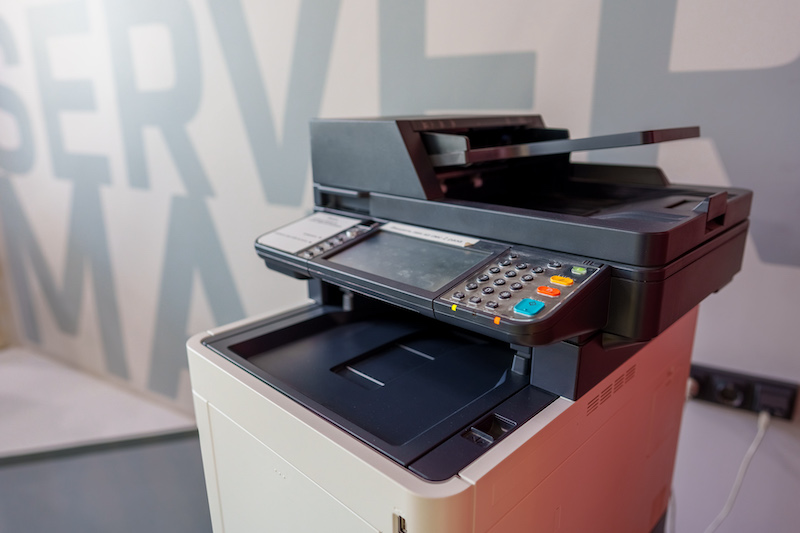
Quick Answer: To choose the right digital copier machine for your business, start by calculating your monthly print volume. Then match machine speed, paper capacity, and color capability to your actual workflow. Finally, decide whether leasing or buying fits your budget. The right choice is rarely the cheapest option. It is the one built for how your office actually operates every day.
The multifunction printer market is projected to reach $21.8 billion globally in 2026. That figure reflects just how central copiers and printers have become for businesses of every size. But bigger numbers do not make the buying decision easier. If anything, they signal that there are more options than ever, and more chances to pick the wrong machine.
So how do you choose a digital copier machine that genuinely fits your team? This guide breaks down every factor, from print volume and paper size to managed print agreements and cybersecurity. Whether your Miami business prints 500 pages a month or 50,000, you will find a clear framework here.
And if you want expert guidance before committing, 1800 Office Solutions has been helping South Florida businesses find the right office equipment.
Step One
How to Assess Your Business Printing Needs
Before you compare brands or browse spec sheets, answer one question honestly: how many pages does your office print each month? This single number shapes every other decision you make.
Most vendors categorize businesses into three tiers based on monthly print volume:
- Low volume (under 2,000 pages/month): A desktop MFP or small-office printer handles the load with ease. Think solo practitioners, small law offices, or boutique agencies.
- Mid volume (2,000 to 10,000 pages/month): A workgroup copier is the right fit. These machines balance speed, duty cycle, and cost-per-page for teams of five to twenty people.
- High volume (10,000+ pages/month): Production or departmental copiers are built for this level. Speed, reliability, and a robust service contract matter most here.
Also consider your print mix. Do you print mostly text documents? Or do your projects include graphics, presentations, and marketing collateral? Color-heavy output changes the cost equation significantly, as color pages typically run $0.06 to $0.12 each versus $0.01 to $0.015 per black-and-white page.
Think about growth, too. A machine sized for today’s volume will feel cramped in 18 months if your team doubles. Buy or lease slightly above your current need, and you will avoid a premature upgrade.
For Miami businesses in sectors like healthcare, legal, or real estate, document volume tends to be higher than most owners expect. Factor in scanning, copying, and faxing alongside printing when you calculate your monthly totals.
Know Your Options
Types of Digital Copier Machines Explained
The phrase “copier machine” covers a wide spectrum of devices. Understanding the categories saves you from overpaying for features you will never use or underpaying for a machine that cannot keep up.
Desktop Multifunction Printers (MFPs)
These compact devices sit on a desk and handle print, copy, scan, and sometimes fax. They suit small offices with modest volume needs. Prices typically range from $300 to $1,500 purchased outright. Speed is usually 20 to 35 pages per minute.
Workgroup Copiers
Floor-standing units designed for shared office use, typically printing 30 to 65 pages per minute. They include larger paper trays, finishing options like stapling and hole-punching, and network connectivity. Purchase prices run $3,000 to $15,000; lease rates typically fall between $150 and $350 per month.
Departmental Copiers
Faster and more durable, these machines handle 65 to 110 pages per minute and are built for teams with serious volume demands. They often include advanced finishing features and expanded paper handling. These units typically cost $10,000 to $25,000 to purchase.
Production Copiers
Built for print shops, large legal departments, and corporate mail rooms. Production machines print at 100+ pages per minute with precise color management. Most businesses will not need this tier, but if volume exceeds 50,000 pages per month, it is worth exploring.
Most South Florida businesses, from Coral Gables law offices to Miami healthcare clinics, find their sweet spot in the workgroup or departmental category. The right machine should run comfortably at 60% to 80% of its rated monthly duty cycle. Pushing a machine to its absolute maximum capacity shortens its lifespan considerably.
Technology Comparison
Inkjet vs. Laser: Which Copier Technology Fits Your Business?
Both inkjet and laser technologies have improved dramatically. But for most business environments, the answer is clear: laser wins for office use.
| Factor | Inkjet | Laser |
|---|---|---|
| Print speed | 10 to 25 ppm | 30 to 110+ ppm |
| Cost per B&W page | $0.05 to $0.10 | $0.01 to $0.015 |
| Cost per color page | $0.10 to $0.25 | $0.06 to $0.12 |
| Best for | Photo printing, low-volume color | High-volume text & mixed output |
| Warm-up time | Instant | 15 to 45 seconds |
| Durability | Moderate | High |
| Maintenance frequency | More frequent | Less frequent |
Laser printers use toner, not ink. Toner cartridges last far longer, which keeps per-page costs lower at scale. So for any office printing more than 1,000 pages per month, laser is typically the more cost-effective path.
Inkjet machines still make sense for studios or creative teams with smaller volumes but demanding color accuracy needs. But for general Miami office use, laser or LED-based digital copiers are the standard choice.
Color or Black & White
Color vs. Monochrome Copiers: Making the Right Call
of the copier market is now dominated by color machines, reflecting growing demand for vibrant business output (Global Copier Market Report, 2025)
Color copiers cost more upfront. Color toner costs more per page. Yet two-thirds of business copiers sold today are color units. Why? Because color matters for proposals, presentations, invoices, and client-facing documents.
But buying a color machine does not mean printing everything in color. Most modern color copiers let you set default modes, so everyday internal documents print in black-and-white while client materials print in full color. That flexibility keeps costs in check while preserving the option for vivid output.
If your office genuinely only produces text documents, invoices, and internal memos, a monochrome machine may serve you well. Monochrome units tend to be faster and cheaper to run. But most businesses find that even occasional color printing justifies the modest price premium of a color MFP.
Ask yourself: would your business lose credibility presenting a black-and-white proposal to a client? If the answer is yes, go color.
What to Look For
Key Features to Compare When Choosing a Copier Machine
Once you know your volume needs and technology preference, these features determine which specific machine deserves your investment.
- Print speed (PPM): Match rated speed to your team’s peak demand. A 35-ppm machine will cause frustration if six people are routinely waiting at the device.
- Paper capacity and handling: Look at total paper tray capacity, not just the main tray. Multiple trays let you stock different paper sizes without constant reloading.
- A3 vs. A4 support: Most offices print letter-size (A4). But architects, engineers, and marketing teams often need 11×17 (A3) capability. Confirm this before purchasing.
- Scanning speed and resolution: If your office scans contracts, medical records, or permits frequently, a fast duplex scanner is not optional. Look for at least 600 dpi resolution.
- Finishing options: Stapling, hole-punching, booklet folding, and saddle-stitching reduce manual labor. For high-volume offices, these pay for themselves quickly.
- Mobile and cloud printing: Employees expect to print from phones and laptops. Ensure the machine supports Wi-Fi, Apple AirPrint, Google Cloud Print alternatives, and your preferred cloud storage services.
- Security features: Look for hard drive encryption, user authentication (PIN or card), and automatic data-wiping. This matters especially for healthcare and legal offices under HIPAA or Florida bar compliance requirements.
- Energy efficiency: ENERGY STAR-certified machines reduce electricity costs and qualify for certain tax incentives. Miami’s utility rates make energy-efficient equipment a meaningful long-term savings.
Do not get distracted by features you will never activate. A copier loaded with unused capabilities is just a more expensive machine. Prioritize the features your team will actually use daily.
The Financial Decision
Lease vs. Buy: Which Makes More Sense for Your Business?
This is the question most Miami business owners wrestle with. And there is no universal right answer. It depends on your cash flow, your tax strategy, and how long you plan to keep the same equipment.
| Factor | Leasing | Buying |
|---|---|---|
| Upfront cost | Low (first/last month) | High ($3,000 to $25,000+) |
| Monthly cost | $150 to $450/month typical | $0 (after purchase) |
| Technology upgrades | Easy at end of term | Requires new purchase |
| Tax treatment | Payments fully deductible as operating expense | Depreciation deductions (Section 179) |
| Maintenance | Often bundled into agreement | Separate service contract required |
| Best for | Predictable budgets, fast-growing teams | Long-term ownership, minimal-change environments |
| Typical term | 36 to 60 months | Equipment life: 5 to 10 years |
Leasing wins for most growing businesses because it converts a large capital expense into a predictable operating line item. You also avoid the risk of owning outdated equipment as technology evolves. But if your business is stable and you plan to keep the same machine for seven or more years, buying outright often produces a lower total cost.
One option worth exploring: managed print agreements through 1800 Office Solutions managed print services. These bundle the hardware, toner, parts, and service into one monthly rate. You get budget predictability without the headache of managing vendors, supplies, and technician calls separately.
Get quotes for both scenarios before deciding. The numbers often tell a clearer story than the theory.
Smarter Printing
How Managed Print Services Can Cut Your Printing Costs
Average reduction in total print costs when businesses adopt a managed print services program (Gartner Group research)
Managed Print Services (MPS) is a program where a vendor like 1800 Office Solutions manages your entire print environment. That includes equipment, supplies, maintenance, and ongoing optimization. You pay a single monthly rate, often structured around a cost-per-page model.
Here is what most businesses discover after switching: they were spending far more on printing than they realized. Studies from Gartner Group consistently show that companies can cut printing-related expenditures by 20% to 30% through MPS. That includes reductions in toner waste, energy use, and unnecessary printing behavior.
So what does MPS actually include?
- Proactive device monitoring so problems are caught before they cause downtime
- Automatic toner replenishment before cartridges run empty
- All parts and labor covered under one agreement
- Fleet optimization to right-size your device count and placement
- Usage reporting that shows who is printing what, and where waste is occurring
- Security updates and firmware management to close vulnerabilities
For Miami businesses managing multiple locations or large teams, MPS eliminates the time staff spend on printer issues. That time has real value. So does the peace of mind of knowing your print environment is professionally maintained.
And with the MPS market valued at $49.6 billion in 2025 and growing rapidly, the technology behind these programs has never been more sophisticated.
Data Protection
Copier Security: Why It Matters More Than You Think
Most business owners secure their computers and servers carefully. Fewer realize that a networked copier holds sensitive data, too. Every document scanned, copied, or printed may be stored on the machine’s internal hard drive. And that data can be extracted if the device is not properly secured.
According to NIST cybersecurity guidelines, multifunction devices represent a growing attack surface for corporate networks. A single compromised copier can expose confidential contracts, patient records, HR files, or financial documents.
When evaluating any business copier, look specifically for:
- Hard drive encryption: Ensures stored data cannot be read if the drive is removed
- Automatic data overwriting: Wipes document data from the drive after each job
- User authentication: Requires a PIN, ID card swipe, or biometric login before releasing print jobs
- Network access controls: Restricts which users and devices can communicate with the copier
- Firmware update management: Keeps security patches current automatically
- Audit logs: Records every print, scan, and copy event for compliance documentation
For South Florida businesses in healthcare, legal, or financial services, these features are not optional extras. They are compliance requirements. Make sure any copier you purchase or lease is built with enterprise-grade security from the ground up.
And before any copier leaves your office at end-of-lease or sale, require documented proof that the hard drive has been wiped. This step is overlooked far too often.
Local Support
Why Service and Support Should Drive Your Decision
Here is something many buyers discover the hard way: the copier is only as good as the service behind it. A $12,000 machine sitting broken for three days costs far more than three days of downtime. It costs client relationships, employee morale, and missed deadlines.
When evaluating service agreements, ask these specific questions before signing anything:
- What is the guaranteed response time for a service call?
- Are parts stocked locally, or do technicians have to order them?
- Does the agreement include all labor, parts, and toner?
- What is the escalation process if my issue is not resolved in one visit?
- Is there a loaner machine available if my copier requires extended repair?
For Miami-area businesses, local support matters especially. A vendor based out of state may offer a lower sticker price but cannot respond as quickly when you have 200 contracts to scan before noon. Same-day or next-business-day response from a technician who knows your equipment is worth paying for.
1800 Office Solutions has served South Florida businesses. That track record tells you something a flashy online catalog cannot.
Your Partner
How 1800 Office Solutions Helps You Choose the Right Copier
Choosing a digital copier machine is a multi-year commitment. It affects your team’s productivity, your IT security posture, and a meaningful chunk of your operating budget. Getting it right matters. That is exactly what 1800 Office Solutions has helped Miami-area businesses do.
Free Needs Assessment
We analyze your print volume, workflow, and budget before recommending any equipment.
Top Brand Selection
We carry Ricoh, Canon, HP, Kyocera, and Sharp, so you get the right brand for your use case.
Flexible Lease Options
36 to 60-month agreements structured around your cash flow, with upgrade paths built in.
Managed Print Programs
All-inclusive print agreements covering hardware, toner, parts, and proactive monitoring.
Security Configuration
Every device is configured with encryption, authentication, and network controls from day one.
Ready to stop guessing and start with a clear picture of the right equipment for your office? Contact 1800 Office Solutions for a free consultation. Our team works across Miami-Dade, Broward, and Palm Beach counties.
Your Questions Answered
Frequently Asked Questions About Choosing a Copier Machine
What is the difference between a copier and a multifunction printer?
A traditional copier only copies documents. A multifunction printer (MFP) prints, copies, scans, and usually faxes from a single device. Nearly all modern business copiers are MFPs. The terms are often used interchangeably, but MFP is the more accurate label for today’s equipment.
How do I calculate my monthly print volume?
Pull data from your existing printer’s utility software or maintenance logs. If those are unavailable, count the paper you order monthly: a standard ream is 500 sheets, so 10 reams means roughly 5,000 pages. Add an estimate for copying and scanning activity on top. Many businesses undercount their volume by 20% to 30% when estimating manually.
Is it better to lease or buy a copier for my small business?
For most small businesses, leasing is the better choice. It preserves cash, keeps monthly costs predictable, and makes it easy to upgrade equipment as your team grows. Buying makes more sense if you plan to keep the same machine for seven-plus years and prefer to own your assets outright. Consult your accountant about the tax implications for your specific situation.
What is cost per page and why does it matter?
Cost per page (CPP) is the total cost of printing one sheet, including toner, drum wear, and maintenance allocated per page. Black-and-white pages typically run $0.01 to $0.015. Color pages run $0.06 to $0.12. For a business printing 10,000 pages monthly, the difference between a low-CPP and high-CPP machine can add up to $1,200 or more per year.
How long do business copiers typically last?
Most commercial copiers are built for five to ten years of reliable use, assuming proper maintenance and operation within the rated duty cycle. Running a machine at 100% of its maximum monthly volume consistently will shorten its lifespan. Plan for a realistic replacement timeline of five to seven years in most office environments.
What security features should I look for in a business copier?
Look for hard drive encryption, automatic data overwriting after each job, user authentication (PIN or card), and network access controls. For regulated industries like healthcare or finance, also confirm the machine supports audit logging for compliance documentation. Ask your vendor to configure these settings at installation, not as an afterthought.
What is managed print services and how can it save my business money?
Managed print services is a program where a provider manages your entire print fleet, covering equipment, toner, maintenance, and optimization. Gartner research shows businesses can reduce print costs by 20% to 30% under MPS programs. The savings come from reduced waste, proactive maintenance preventing costly repairs, and right-sizing your device fleet to actual usage patterns.
Should I choose a color or monochrome copier?
Choose color if your business regularly produces client-facing documents, presentations, or marketing materials. Color machines now make up 67% of the market because the premium over monochrome has dropped significantly. But if your office prints only internal text documents, a monochrome unit offers faster speeds and lower per-page costs. Many businesses start with color and set default modes to black-and-white for everyday printing.
What brands of copiers does 1800 Office Solutions carry?
1800 Office Solutions carries machines from Ricoh, Canon, HP, Kyocera, and Sharp. Our team recommends a brand based on your specific use case rather than inventory targets. Each brand has distinct strengths: Ricoh and Canon are known for reliability at high volume; Kyocera for low total cost of ownership; HP for seamless integration with existing IT environments.
How quickly can 1800 Office Solutions service a copier in Miami?
Technicians carry a broad inventory of common parts so most repairs are completed in a single visit. We serve Miami-Dade, Broward, and Palm Beach counties.
What is the difference between inkjet and laser copiers for business use?
Laser copiers use toner and produce sharper text at lower per-page costs, making them the standard for business use. Inkjet machines produce richer photo output but cost more per page at scale and print more slowly. So for any office printing above 1,000 pages per month, laser is almost always the more cost-effective choice.
What paper sizes do I need to consider when buying a copier?
Most business copiers handle standard letter (8.5×11) and legal (8.5×14) sizes by default. If your team ever prints 11×17 tabloid pages, architectural drawings, or oversized presentations, you need an A3-capable machine. Confirm paper size support before purchasing; retrofitting for A3 is not possible after the fact and often means buying a second, larger device.
Ready to Find the Right Copier for Your Business?
1800 Office Solutions has helped Miami and South Florida businesses choose, lease, and maintain the right office equipment. Let our team do a free needs assessment and walk you through your best options, no pressure, no guesswork.
GET A FREE CONSULTATION
Call us: (888) 574-5120
Your One Source For Everything Office