



Key Benefits of Implementing a Business Continuity Plan (BCP)

Understanding the Importance of a Business Continuity Plan (BCP)
Are you struggling to prepare your organization for unexpected disruptions? This article breaks down what a business continuity plan (BCP) is and why it matters. Readers will find steps to create a solid strategy and clear differences between BCPs and disaster recovery plans. The content offers practical advice to help reduce downtime and protect key operations, ensuring that businesses remain functioning during emergencies.

What Is a Business Continuity Plan (BCP)?
A business continuity plan outlines steps to sustain operations during disruptions. It covers emergency procedures, IT service continuity management, and a clear methodology to address risks like cyberattack and business disruption. This section explains the plan’s definition and identifies key components to support resilient operations.
Definition and Key Components
The business continuity plan acts as a strategic plan that defines steps to maintain operations during unexpected events. It outlines a detailed planning process that incorporates risk assessments, IT service continuity management, and compliance with standards such as iso, which help to enable recovery and reduce potential damage.
This approach emphasizes innovation in addressing operational challenges and provides a clear methodology to tackle incidents ranging from cyberattacks to equipment failures. The framework assists decision-makers in retrieving practical insights and ensuring that the organization remains resilient when disruptions occur.
Understanding Business Continuity Plans
This section outlines the framework of a business continuity plan by covering key aspects such as strategy, risk assessment, and strategic planning. It also touches on practical areas affecting cash flow and investment decisions, setting the stage for detailed insights in subsequent topics.
The Framework of a Business Continuity Plan
The framework of a business continuity plan is defined by a well-organized structure that supports both operational function and swift recovery in crisis situations. It incorporates practical elements such as credit card transaction protocols and regulatory standards to ensure that even crucial financial operations remain secure, while an advanced app simplifies the monitoring and execution of emergency procedures under informed leadership.
The framework also stresses the critical role of leadership in guiding the organization’s response to unexpected challenges. A reliable plan aligns strategy with functional needs, balancing everyday operations with safeguards that maintain service integrity during disruptions, ensuring that both credit card systems and regulatory processes continue to perform effectively.
Importance of Business Continuity Plans for Organizations
This section highlights the role of a continuity plan in safeguarding financial performance, ensuring operational resilience, protecting organizational reputation, and meeting regulatory requirements. Practical insights on entrepreneurship, accessible pdf tools, internet updates, and a continuity plan example offer clear guidance for building an effective strategy that supports a robust response to disruptions.
Ensuring Operational Resilience
The implementation of a comprehensive bcp plan strengthens an organization’s operational resilience by integrating continual bcp testing and refined continuity management practices. Decision-makers gather feedback regularly from key stakeholders and practitioners globally, ensuring that their strategies remain both effective and relevant in mitigating risks during unexpected events.
Organizations utilize bcp plan strategies to ensure operational resilience by addressing vulnerabilities in real time and adapting to shifting global conditions. Through continuous feedback mechanisms and portfolio-wide bcp testing, companies maintain robust continuity management practices that foster quick recovery, minimize downtime, and provide clear guidance during disruptions.
Protecting Organizational Reputation
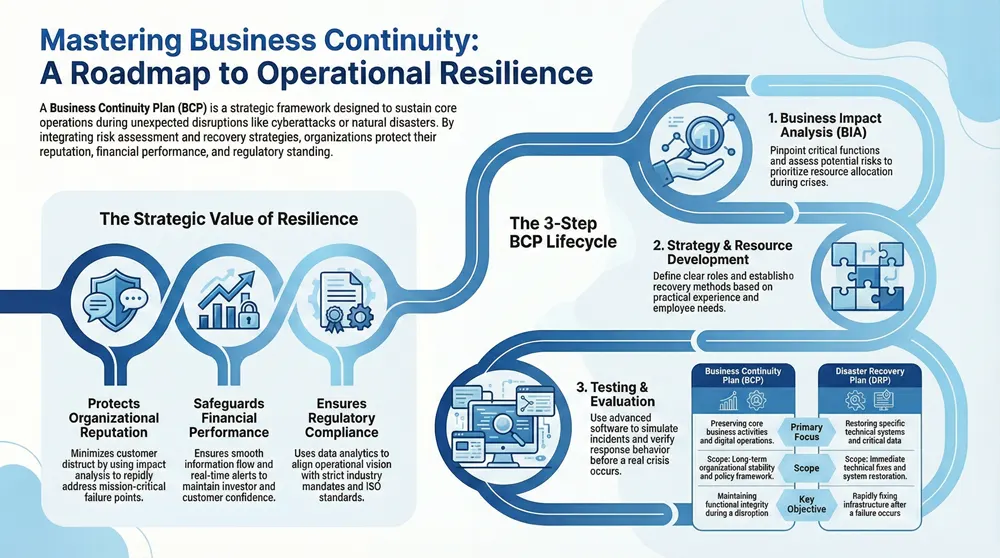
Organizations protect their reputation by utilizing bcp software that incorporates impact analysis to address failure points and sudden challenges. This approach proves useful when reacting to natural disaster scenarios and maintains mission critical operations through the smart use of artificial intelligence for informed decision-making.
Effective planning minimizes negative press and customer distrust by rapidly addressing risks. With practical tools such as impact analysis and bcp software, companies handle mission critical situations, including those triggered by natural disaster events, while benefiting from artificial intelligence-driven insights.
Compliance With Regulations
Organizations verify compliance with regulations by using a business continuity plan that leverages robust data type analytics to identify and mitigate risk. This method supports strategic management by aligning regulatory requirements with operational vision and practical action steps.
Organizations implement systematic reviews to ensure adherence to compliance mandates while minimizing risk. The integration of targeted data type assessments and strategic management principles provides a clear vision for meeting regulatory standards and enhancing operational stability.
Safeguarding Financial Performance
The implementation of an effective business continuity plan safeguards financial performance by ensuring that critical information flows smoothly even during unexpected events. A well-structured disaster recovery plan integrates modern solutions such as a mobile app for real-time alerts, enabling organizations to maintain customer confidence and access actionable information promptly.
Adopting a business recovery plan example helps organizations identify vulnerabilities and streamline processes essential for rapid financial stabilization. This proactive approach marries technology with traditional practices to secure operations, balancing cost efficiency with strategic risk management in an increasingly unpredictable environment.
Steps to Develop an Effective Business Continuity Plan

This segment outlines essential steps for an effective business continuity plan. It covers the process of conducting a business impact analysis, identifying critical functions and resources, developing recovery strategies, and testing and updating the plan. Keywords such as disaster, customer satisfaction, revenue, insurance, and checklist naturally highlight best practices for safeguarding operations.
Conducting a Business Impact Analysis
Conducting a business impact analysis helps organizations pinpoint critical functions and assess potential disruption risks. The process builds a culture focused on security and resilience, while engaging community insights to address vulnerabilities specific to business operations.
This analysis provides actionable insights that affect decision-making and resource allocation during crises, ensuring that key processes remain secure and sustainable. Experts encourage companies to integrate feedback from internal teams and external partners, enhancing the overall protection against unforeseen disruption.
Identifying Critical Functions and Resources
The process of identifying critical functions and resources is essential for a successful business continuity plan. Organizations often integrate a bcdr plan strategy to ensure that every department’s mission is sustained during interruptions, including instances when a disease outbreak impacts normal operations. This evaluation also covers the detailed requirements needed to maintain overall business continuity.
Special focus is given to uncovering segments vital to the organization’s mission and operational success under a business continuity plan. By scrutinizing each element, companies gain practical insight into mitigating risks and addressing challenges, which is crucial to ensuring a seamless response even during events related to disease outbreaks or other disruptions.
Developing Recovery Strategies
The development of recovery strategies focuses on creating actionable solutions that support swift operational recovery, leveraging insights from a proven bcp plan example and drawing on industry experience. This process also considers the needs of employees while applying guidelines from the international organization for standardization to ensure systems are well-prepared for managing risks, including those related to tax issues.
Organizations benefit from establishing clear recovery methods that address real challenges observed during previous incidents, ensuring continuous service during operational disruptions. Managers use detailed recovery strategies that incorporate best practices from a bcp plan example, practical experience, and the active engagement of employees, all while aligning with international organization for standardization standards and regulatory tax considerations.
Testing and Updating the Plan
Organizations regularly test their business continuity plans using advanced software to verify the response behavior when unexpected incidents occur. Such research-driven testing helps identify gaps, ensuring that the plan remains effective and the organization’s operational resilience is maintained.
Updating the plan involves refining strategies based on real-life performance feedback and evolving business behavior to further secure the brand’s reputation. Consistent evaluation and improvement make business continuity plans more reliable in managing risks and sustaining functions during disruptions.
Differences Between Business Continuity Plans and Disaster Recovery Plans
Key distinctions in purpose and scope include how each plan addresses downtime and financial disruptions. A business continuity plan focuses on maintaining digital operations and safeguarding finance, while a disaster recovery plan prioritizes restoring loan systems and critical data. These insights pave the way for examining each approach in greater detail.
Key Distinctions in Purpose and Scope
Within business continuity planning, the emphasis on maintaining an organization’s computer infrastructure contrasts with disaster recovery plans, which concentrate on immediate technical fixes. This strategy involves rigorous market analysis and a clear policy framework to ensure that both long-term mentorship and operational stability are achieved when disruptions occur.
Business continuity plans focus on preserving core business activities, while disaster recovery efforts target restoring specific technical systems promptly. The approach integrates market analysis and tailored mentorship programs to solidify policy directives, ensuring that the overall infrastructure remains resilient even during critical incidents.
Real-Life Examples of Effective Business Continuity Plans
This section explains practical examples including a small business case study highlighting resilience and a large corporation case displaying success. It shows how javascript tools, banco de crédito del perú strategies, and credit management boost productivity as seen by the small business administration. Each example provides clear insights into effective business continuity planning.
Case Study: Small Business Resilience
A small business demonstrated resilience by adopting a continuity of operations plan that effectively safeguarded its key asset during unexpected disruptions. The business strategy incorporated rigorous accounting checks and coordinated with the federal emergency management agency to streamline recovery processes and ensure minimal impact on operations.
The company capitalized on its detailed planning to continue executing core functions even when facing severe challenges. This proactive approach, which integrated accounting reviews and strategic use of its asset management, provided practical insights that reinforced the importance of a robust continuity of operations plan and aligned with broader business strategy initiatives.
Case Study: Large Corporation Success
The corporation successfully managed its operations during a severe pandemic by implementing a robust business continuity plan that prioritized disaster recovery. The organization maintained essential communication, even updating its contact processes with a dedicated email address for crisis-related inquiries, ensuring that valuable resources were effectively utilized and recovery patches were promptly applied to critical systems.
The company’s strategic planning enabled swift restoration of services following operational disruptions, allowing them to secure both digital infrastructure and key assets. An internal review confirmed that the coordinated recovery efforts, which incorporated real-time resource management and continuous oversight, substantially minimized downtime and enhanced overall organizational resilience.
Essential Elements to Include in a Business Continuity Plan
This section outlines essential elements for an effective business continuity planning strategy. It covers key topics including a robust communication plan, clearly defined roles and responsibilities, and targeted training and awareness initiatives. The content highlights the use of technology and mobile solutions to support resilience and sustainability, setting the stage for a practical analysis of approaches set to march forward in modern operations.
Communication Plan
The communication plan in a business resilience program must address backup protocols and failure response measures while ensuring secure login processes for team access. It integrates advanced tool functionalities that support timely alerts and assist in maintaining information flow during disruptions.
The strategy recommends routine updates to prevent failure points and improve overall connection reliability during a backup operation. It draws on practical examples from organizations where a well-executed communication plan significantly influenced the success of their business resiliency program.
Roles and Responsibilities
The clear designation of roles and responsibilities remains a vital aspect of any business continuity plan. This document outlines defined tasks, ensuring that departments such as an investment bank, supply chain management, and analytics teams work in coordinated efforts to execute a well-structured business recovery plan during disruptions.
Assigning specific responsibilities helps organizations pinpoint accountability and streamline coordination during emergencies. A well-crafted document supports dynamic decision-making and fosters collaboration across departments, from the supply chain to analytics, ensuring that the business recovery plan is executed efficiently while addressing potential pain points.
Training and Awareness Initiatives
The training and awareness initiatives form an integral part of an effective bcm plan. They equip team members with the necessary data analysis skills to manage risk and ensure secure payment processes, which proves vital in addressing operational concerns and protecting valuable assets.
Practical training sessions offer hands-on insights into risk management, while awareness programs highlight the significance of comprehensive data integration. The approach helps the organization build confidence and readiness, a key point emphasized in every article on business continuity planning.
The Long-Term Benefits of a Business Continuity Plan
This section outlines sustainable advantages of a business continuity plan, including fostering employee confidence, enhancing stakeholder trust, and supporting sustainable growth. It highlights continuity of operations plan examples, trade resilience, budget management, business impact analysis, and wealth management strategies, offering practical insights that directly link operational stability to long-term organizational success.
Fostering Employee Confidence
The implementation of a robust bcp reinforces employee confidence by ensuring that management is prepared to handle any business process disruption effectively. The company demonstrates its commitment to resilience through clear action plans that include rapid response cards and continuous monitoring, reinforcing trust among staff while promoting a safer work environment.
Strong continuity planning builds confidence among employees by equipping them with well-defined procedures that simplify complex business processes. The approach allows management to act decisively and communicate clear strategies, which helps a company maintain stability and keeps staff informed and prepared through the structured use of cards and practical bcp insights.
Enhancing Stakeholder Trust
The implementation of a solid business continuity plan builds stakeholder confidence by demonstrating that the organization can manage challenges such as a power outage or flood, ensuring that information technology and data center operations remain secure. This approach reassures investors and partners that the company is prepared for unforeseen events, including health emergencies, with measures actively in place to sustain critical functions.
The plan instills trust among all stakeholders by clearly outlining preemptive actions for potential disruptions such as power outages and floods while addressing concerns related to information technology and data center stability. Through consistent preparation and transparent communication, organizations provide practical insights that reassure stakeholders of a stable and secure operational environment, even during health crises.
Supporting Sustainable Growth
The plan helps organizations secure sustainable growth by reinforcing recovery processes and structured planning that mitigate potential disruptions. Industry experts have noted that detailed planning and well-tested recovery strategies lead to consistent operational improvements, prompting executives to read article updates regularly for accurate insights.
Business continuity initiatives prove valuable by integrating recovery tactics into daily operations, which supports strategic decision-making and promotes sustainable expansion. The systematic approach allows companies to manage unforeseen issues while continuing growth, ensuring stakeholders are consistently informed and encouraged to read article reports for the latest planning advances.
Conclusion
Understanding a business continuity plan remains a critical asset for organizations facing unexpected challenges. The strategy safeguards essential operations, preserves financial stability, and reinforces adherence to regulatory guidelines. Clear roles, testing protocols, and recovery strategies enhance both operational performance and stakeholder confidence. This structured methodology drives organizations toward long-term resilience and sustainable growth.