


Consulting IT Companies: Who’s Leading the Charge?

AI Overview:
This blog explains why the $110B IT consulting market is rapidly growing and how consulting IT companies help businesses modernize, secure systems, and adopt new technologies. It breaks down the main types of consulting firms—global full-service providers, strategic advisors, boutique specialists, and tech-specific experts—and highlights their roles in digital transformation, cloud migration, cybersecurity, and AI adoption.
The guide also shows how to choose the right IT partner based on goals, expertise, and pricing models, giving businesses a clear path to smarter technology decisions and long-term growth.
The IT Consulting Market is Booming – Here’s Who’s Leading
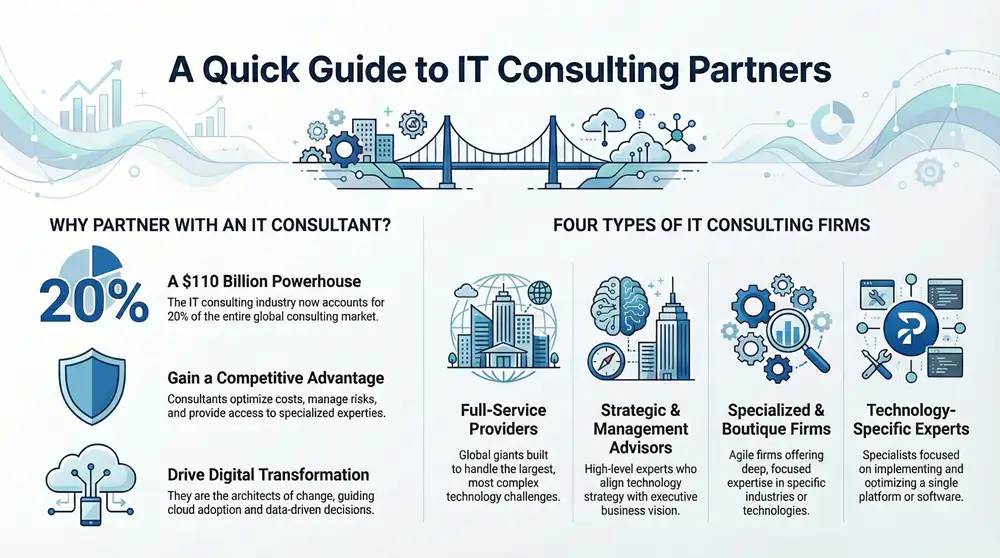
Consulting IT companies are changing how businesses handle technology challenges. The global IT consulting market is valued at over $110 billion, accounting for roughly 20% of the total consulting industry. These firms have become essential partners for organizations of all sizes.
The market is led by global giants with hundreds of thousands of employees and billions in revenue, but a wide range of firms exist to serve different business needs.
The surge in demand comes from businesses racing to modernize their operations, migrate to the cloud, and strengthen cybersecurity defenses. Companies that once managed IT internally now turn to specialized consulting firms for expertise in artificial intelligence, digital change, and emerging technologies.
Understanding the consulting landscape is key to choosing the right partner, whether for a simple system upgrade or a major technology overhaul. The key differences lie in service specialization, company size, and industry focus.
From global firms handling enterprise-wide changes to boutique firms with specific expertise, each type of consulting company serves different business needs and budgets.
Consulting it companies terms to learn:
- it consultant chicago
- it staffing consultancy in chicago
The Expanding Market for Consulting IT Companies
In today’s technology revolution, consulting IT companies act as trusted guides, helping organizations steer the digital landscape efficiently. Think of them as your GPS for technology—they know the shortcuts and help you reach your destination faster.
The IT consulting industry is a $110 billion powerhouse, making up about 20% of the global consulting market. Its steady growth is driven by the urgent need for digital change, improved business efficiency, and smart technology adoption.
The shift to remote and hybrid work has accelerated this demand. Companies that once handled IT internally suddenly needed to support distributed teams, secure cloud environments, and maintain productivity. The question, What is IT Support and Why Do You Need It?, has become common as businesses realize the complexity of modern technology.
Why Businesses Need IT Consulting
Keeping up with technology is overwhelming, from daily cybersecurity threats to evaluating if artificial intelligence can help your sales team. Consulting IT companies offer invaluable strategic guidance that cuts through the noise.
They provide a competitive advantage by helping you implement the right technologies at the right time, not just the latest gadgets. Cost optimization is where many businesses see immediate value. IT consultants identify inefficiencies, eliminate redundant systems, and recommend solutions that deliver a clear ROI. They provide access to expertise that is too costly to maintain in-house, such as full-time cybersecurity experts, cloud architects, and AI specialists.
Smart risk management is another crucial benefit. Consultants spot potential problems before they become expensive disasters. They are also essential for scaling operations, ensuring your technology grows with your business instead of becoming a bottleneck. If you’re tired of constantly fighting IT fires, How Can You Go From Reactive to Preventive IT? explores how the right consulting partnership can transform your approach.
The Role of IT in Digital Change
Digital change is a complete rethinking of how businesses operate. Consulting IT companies are the architects of this change, helping organizations implement process automation that eliminates tedious manual tasks and frees up your team for strategic work.
They revolutionize the customer experience by designing intuitive digital interfaces and personalized interactions. Consultants also enable data-driven decisions by helping you collect, analyze, and interpret business data, turning raw numbers into actionable insights that drive growth. Cloud adoption remains a massive focus, with experts guiding seamless migrations and optimizing environments for performance and cost.
All of this leads to business model innovation, helping companies adapt and create new revenue streams. The Benefits of IT as a Service model exemplifies this shift, allowing businesses to access enterprise-level technology without the enterprise-level headaches.
Types of Consulting IT Companies
Just like there are many types of businesses, there are many types of consulting IT companies, each with unique strengths. Understanding these distinctions is crucial for finding the right partner to help your business thrive.

Full-Service IT Consulting Providers
Think of these as the titans of the consulting world. These massive firms, often employing hundreds of thousands of people globally, are built to handle the biggest, most complex technology challenges. These large firms, some with hundreds of thousands of employees and billions in revenue, represent the gold standard of comprehensive IT consulting.
These full-service providers shine when you need everything under one roof. Whether you’re a large enterprise planning a complete digital overhaul or a mid-sized company looking for end-to-end solutions, they have the resources to see you through from strategy to implementation and support.
With vast networks of professionals spanning dozens of countries, these firms have the scale to tackle large-scale projects that might overwhelm smaller consultancies. The IT services divisions of major technology corporations are often significant revenue drivers, showcasing how critical these comprehensive services have become.
What makes these giants so powerful is their broad service portfolio. From cloud migration and cybersecurity overhauls to AI implementation, they have specialists for nearly every need. This breadth means you won’t be juggling multiple vendors or worrying about integration.
Strategic & Management IT Advisors
Some consulting IT companies operate at the highest levels of business strategy, working with executive teams to align technology with business vision. These firms blend management consulting expertise with deep technology knowledge to drive business change.
Well-known management consulting firms have developed dedicated digital practices. They use proprietary analytics and automation tools to guide organizations through digital change and have built specialized groups for advanced analytics, AI, and innovation incubation.
These strategic advisors excel at creating technology roadmaps that align with your business goals. They help ensure your technology investments move the needle on revenue, efficiency, and competitive advantage. When you need someone who can speak both business alignment and technical implementation fluently, these firms bridge that gap.
Their C-suite advisory services are valuable during major business transitions, mergers, or when planning market expansions that require technology as a key enabler.
Specialized & Boutique IT Consulting Firms
Here’s where things get interesting for small to mid-sized businesses. Boutique consulting firms might not have the massive scale of the giants, but they offer something equally valuable: focused expertise and personalized service.
These specialized consulting IT companies typically focus on specific industries, technologies, or business sizes. Some firms focus specifically on accelerating digital change at scale, while others build their practice around a single technology ecosystem, offering deep expertise in specific enterprise software implementations.
What makes boutique firms special is their agility. They can pivot quickly, provide more direct access to senior consultants, and often develop industry-specific solutions that fit your unique challenges. For many businesses, this personalized approach leads to better outcomes and stronger long-term relationships.
The key is finding a boutique firm whose expertise aligns with your specific needs. If you’re looking for local expertise, our guide on 7 Tips for Choosing a Managed IT Service Provider in Miami offers valuable insights.
Technology-Specific IT Consulting
Sometimes you don’t need a complete overhaul—you need deep expertise in one specific area. Technology-specific consultants are specialists who live and breathe particular platforms or technologies. These implementation specialists ensure that when you choose a specific solution, it’s not just installed correctly but optimized to deliver maximum value.
These firms excel at system optimization and provide ongoing support for leading business technologies. Whether you need experts in specific ERP systems, cloud platforms, or specialized software, these consultants bring laser-focused expertise that general practitioners might lack.
The beauty of working with product and platform experts is their depth of knowledge. They’ve seen every possible implementation scenario, know the common pitfalls, and can help you avoid costly mistakes. They’re also invaluable for ongoing optimization, helping you get the most from your technology investments as your business evolves.
Core Services That Drive Business Value
What consulting IT companies offer is change. Their services aim to open new possibilities for businesses of all sizes by translating complex technology into business value.
Strategic IT Planning and Advisory
Strategic IT planning happens before any code is written. It starts with understanding your current business state and future goals, creating a technology roadmap for your journey.
Consulting IT companies begin with a comprehensive IT assessment, examining your current infrastructure to spot inefficiencies and identify opportunities. From there, they help with IT budgeting, ensuring every dollar you spend on technology moves your business forward.
The roadmapping process is particularly valuable. Instead of making reactive technology decisions, you’ll have a clear path that aligns with your business goals. This includes vendor management—helping you steer technology providers and negotiate better deals.
Our IT Consulting services focus on this strategic foundation, because businesses with solid IT planning often spend less on technology while achieving better results.
Cloud and Managed Infrastructure
The cloud is now the backbone of modern business. Cloud migration is essential, but it’s not as simple as flipping a switch. Consulting IT companies guide businesses through this complex process, whether moving to public, private, or hybrid cloud solutions.
A sobering reality: 75% of cloud migration projects run over budget. Expert guidance is invaluable for avoiding common pitfalls, optimizing performance, and saving money in the long run.
Beyond the cloud, there’s the day-to-day reality of data center management and network architecture. Our Managed IT Infrastructure Services take this burden off your shoulders, ensuring your technology foundation is rock-solid.
For businesses just getting started, keeping track of physical assets is also crucial. Our Small Business IT Hardware Checklist helps you stay organized and make smart purchasing decisions.
Cybersecurity and Data Privacy
The cybersecurity threat landscape changes daily, making last year’s protections potentially obsolete. Consulting IT companies approach security holistically, starting with comprehensive risk assessments to identify your vulnerabilities.
Modern threat detection involves advanced tools like dark web monitoring for compromised credentials and Security Information & Event Management (SIEM) systems that identify suspicious patterns in real-time. Some businesses establish a dedicated Security Operations Center (SOC) for round-the-clock protection.
Compliance adds another layer of complexity. Whether you need to meet HIPAA, GDPR, or other industry-specific regulations, the penalties for getting it wrong can be devastating. Professional consultants ensure you’re not just protected, but compliant.
Data protection and incident response planning are equally critical. It’s not just about preventing attacks—it’s about minimizing damage when something does happen. The role of IT consulting in enhancing cybersecurity has never been more important as threats evolve and target businesses of all sizes.
AI, Data Analytics, and Emerging Tech
This is where business gets exciting. Artificial intelligence and machine learning are practical tools that can transform how you operate. Consulting IT companies help businesses implement business intelligence systems that turn raw data into actionable insights.
Process automation can free your team from repetitive tasks, letting them focus on creative problem-solving. Internet of Things (IoT) technology connects your physical and digital worlds in new ways.
The key is future-proofing your business. Technology moves fast, but with the right guidance, you can stay ahead of the curve. Current trends show that businesses investing in emerging technologies now are positioning themselves for long-term success.
The beauty of working with experienced consulting IT companies is that they’ve seen what works. They can help you avoid expensive mistakes while implementing technologies that deliver measurable business value.
How to Choose the Right IT Consulting Partner
Choosing the right consulting IT company is a strategic decision that requires careful due diligence. It’s about finding a long-term partner who understands your unique challenges and goals.
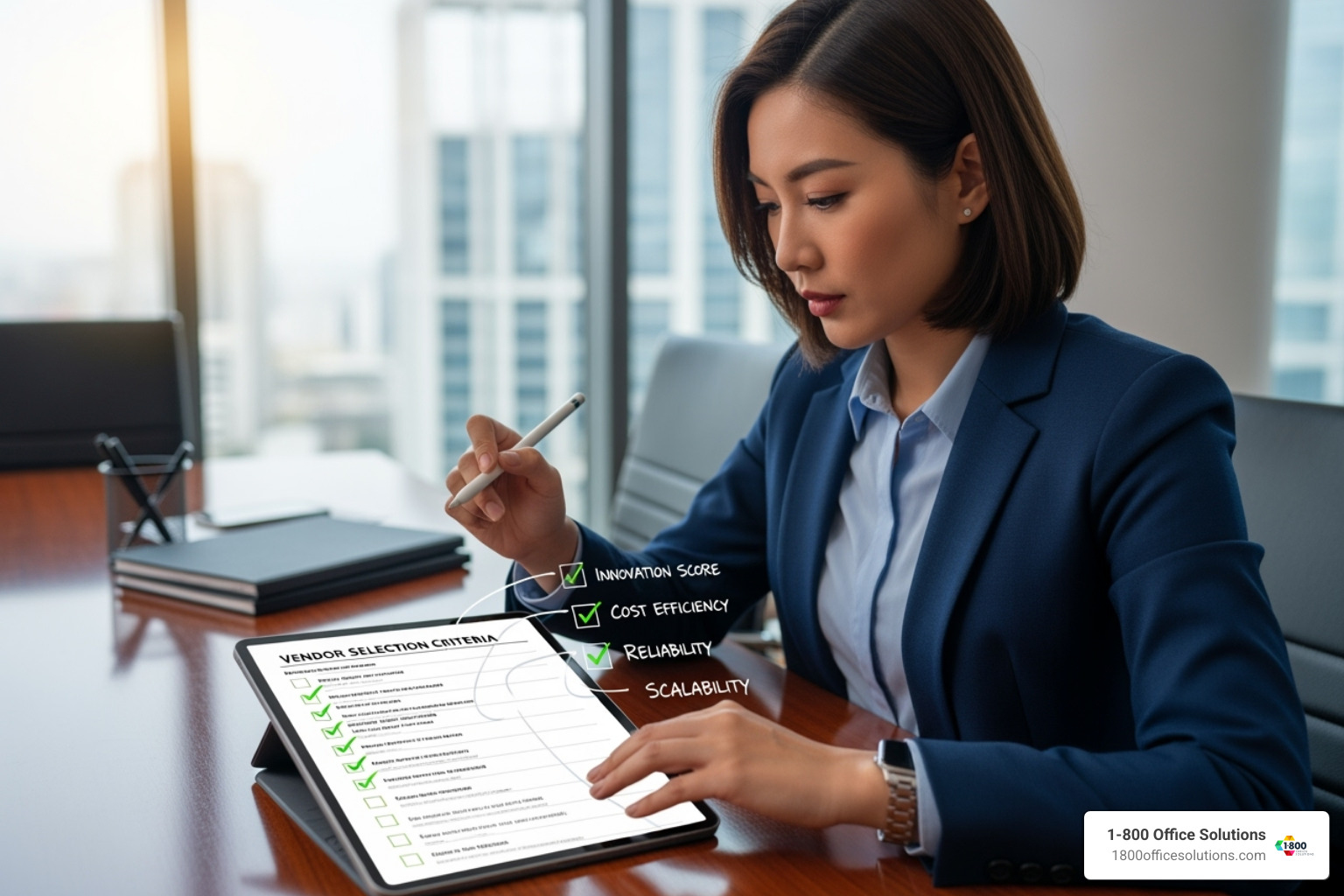
You need an advisor with technical expertise who also understands your industry, budget, and vision. The right choice can transform your operations and give you a competitive edge, while the wrong one leads to costly delays and mismatched solutions.
Defining Your Business Needs and Goals
Before researching partners, clearly define what you want to accomplish. What specific problem are you trying to solve? Are you struggling with outdated systems, poor cybersecurity, or the need for a scalable infrastructure?
Your scope of work will influence which type of firm is the best fit. For example, a small business modernizing its email system has different needs than an enterprise planning a complete digital change. Understanding your project goals and how you’ll measure success—whether that’s reduced downtime, improved efficiency, or cost savings—helps you communicate effectively with potential partners.
Establishing budget constraints upfront is equally important. IT consulting investments can range from a few thousand dollars to hundreds of thousands. Our IT Cost Calculator can help you get a realistic sense of potential expenses.
Evaluating Expertise and Track Record
Once you know what you need, assess potential partners on their ability to deliver. Look for consulting IT companies with relevant industry experience—a firm specializing in healthcare IT will understand HIPAA compliance in ways a generalist might not.
Ask for case studies and client testimonials. These provide real-world examples of how they’ve helped businesses similar to yours. Pay attention to how they handled challenges, communicated during setbacks, and whether they delivered on time and within budget.
Technical certifications matter, but the best consultants combine technical expertise with business acumen. They understand that technology should serve business objectives, not the other way around. When evaluating partners, ensure they have certified professionals on their team. A qualified IT Support Technician who understands both the technical and business sides of your challenges makes all the difference.
Understanding Pricing and Engagement Models
IT consulting costs vary, based on complexity, expertise, and location. Understanding the different pricing models is crucial for making an informed decision.
- Hourly rates offer flexibility but can make budgeting difficult. Specialized work like cybersecurity assessments commands premium rates.
- Project-based fees provide budget certainty but require a crystal-clear scope upfront.
- Retainers work well for ongoing access to expertise, providing a set number of hours each month for a predictable cost.
- Managed services contracts offer comprehensive, proactive IT management for a flat monthly fee, often providing the best value for continuous support.
- Block time agreements let you prepay for consulting hours at a discounted rate, which is ideal for businesses with planned projects.
Weekend and holiday support typically costs more. Always clarify these details before signing an agreement.
The table below shows how the most common IT service models compare:
| Feature | Managed Services | Block Time Agreement | Break-Fix (Hourly) |
|---|---|---|---|
| Pricing Model | Flat monthly fee | Prepaid hours at discounted rate | Hourly rate for services rendered |
| Focus | Proactive maintenance, monitoring, strategic IT | Project-based work, specific tasks, on-demand help | Reactive repairs when something breaks |
| Budgeting | Predictable, easy to budget | Predictable for set number of hours | Unpredictable, can lead to surprise costs |
| Coverage | Comprehensive ongoing support for entire IT environment | Flexible for specific projects or periods | Limited to immediate problem resolution |
| Relationship | Long-term partnership | Transactional for specific needs | Transactional, short-term |
| Cost Efficiency | Often lowest overall cost for ongoing needs | Good for projects, saves on hourly rates | Can be expensive for frequent issues, no proactive care |
The key is matching the engagement model to your specific needs and working style.
Frequently Asked Questions about Consulting IT Companies
When business owners ask about consulting IT companies, a few key questions come up repeatedly. Here are clear, practical answers to help you make an informed decision.
What is the difference between IT consulting and managed IT services?
The key difference is the timing and relationship structure.
IT consulting is typically project-based and finite, like hiring a specialist for a specific task. A consultant provides strategic advice and helps execute a solution, such as a cloud migration or technology roadmap. Once the project is complete, the engagement ends.
Managed IT services are an ongoing partnership. A provider proactively manages your entire IT environment for a predictable monthly fee, handling monitoring, maintenance, and support to prevent problems before they occur.
Many consulting IT companies offer both. They might start with a consulting project to design solutions, then transition to managed services to keep everything running smoothly. This combination provides both strategic direction and day-to-day peace of mind.
What skills are required to become an IT consultant?
A successful IT consultant needs both technical expertise and human skills. On the technical side, deep knowledge in areas like cloud computing, cybersecurity, networking, and data analytics is essential. Certifications are important, but they are just the foundation.
What truly sets great consultants apart are their soft skills. They are exceptional problem-solvers who can untangle complex business challenges into actionable steps. They are also excellent communicators who can explain technical concepts without jargon. Project management abilities are crucial for coordinating work across different departments.
Most importantly, successful IT consultants have strong business acumen. They understand how technology can drive real business results. A degree in computer science or a related field is common, but many successful consultants bring valuable perspectives from other fields.
How can small businesses benefit from IT consulting?
Small businesses benefit greatly from IT consulting because it provides enterprise-level expertise without the high overhead. Most small businesses cannot justify hiring full-time specialists for cybersecurity, cloud architecture, or digital strategy. Consulting gives them access to this expertise on demand.
The benefits are both immediate and long-term. Consultants help small businesses improve efficiency by implementing the right software and optimizing workflows. They strengthen security by identifying vulnerabilities and putting robust protections in place, which is crucial when a single data breach can be devastating.
As a business grows, consultants ensure its technology can scale with it, helping avoid the common trap of outgrowing systems. IT consulting levels the playing field, allowing small businesses to compete effectively with larger competitors by using modern technology and strategic IT practices.
Conclusion
As the technology landscape evolves, consulting IT companies have become essential partners for businesses of all sizes. Whether you’re a small business owner modernizing operations or a growing company planning a technology leap, the right IT consulting partner can make all the difference.
From large global firms to specialized boutique companies, there is a consulting solution for every business need and budget. The key is to understand your goals and find a partner who shares your vision.
At our company, we’ve seen how the right technology strategy transforms businesses in our service areas—from Orlando and Tampa to Charlotte and Atlanta. We understand that small to mid-sized businesses need enterprise-level expertise without the enterprise-level overhead. You need partners who know that every technology decision impacts your bottom line.
We aim to be your strategic technology partner, combining our managed IT services with comprehensive office solutions like copier leasing and VoIP systems. We believe technology should work seamlessly in the background, letting you focus on running your business.
The future belongs to businesses that use technology strategically. With the right consulting IT company by your side, you can strengthen cybersecurity, migrate to the cloud, and ensure your systems run smoothly, making your business journey more successful.
Ready to find how the right IT partnership can transform your business? Get a quote for our IT services and let’s start building your technology roadmap today.