


Protecting Manufacturing Emails: Insights from Industry Experts

Email security for manufacturing is a critical component in safeguarding the industry from cyber threats that can lead to significant financial and reputational damage. In manufacturing, cyberattacks are not just about stealing money or causing chaos; their primary aim is often to steal valuable trade secrets or intellectual property. For example, one unsuspecting email can be a gateway for malware to infiltrate an entire network, jeopardizing everything from production schedules to the design of cutting-edge products.
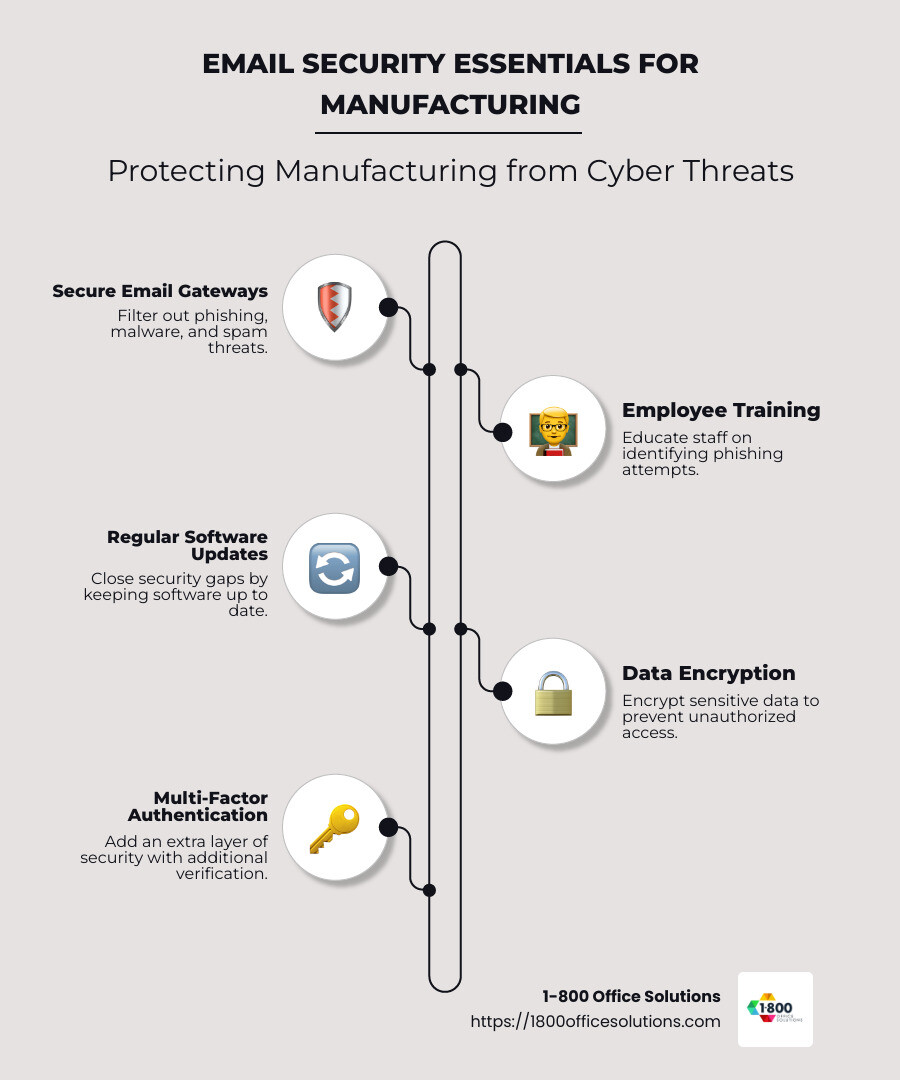
To address these risks effectively, it is important for manufacturers to:
- Integrate secure email gateways to filter out threats.
- Educate employees on recognizing phishing emails.
- Regularly update software to close security gaps.
Manufacturers must recognize that outdated systems and poorly secured email communications are significant vulnerabilities. Ensuring robust email security is not just a technological need; it’s a strategic business imperative. This protection is crucial in an industry where a cyber incident could result in thousands of dollars lost per hour, as illustrated by past incidents like the WannaCry ransomware attack.
Key terms for Email security for manufacturing:
Understanding Email Security for Manufacturing
In the manufacturing world, email is both a vital tool and a potential security risk. Cyber threats like phishing, ransomware, and malware often use email as their entry point. Understanding these threats is crucial for protecting sensitive information and maintaining operational continuity.
Phishing: The Silent Threat
Phishing is a deceptive attempt to obtain sensitive information by posing as a trustworthy entity. In manufacturing, a phishing email might look like an urgent message from a supplier or a colleague. When an employee clicks on a malicious link or opens a dangerous attachment, the door is opened for attackers to steal trade secrets or install malware.
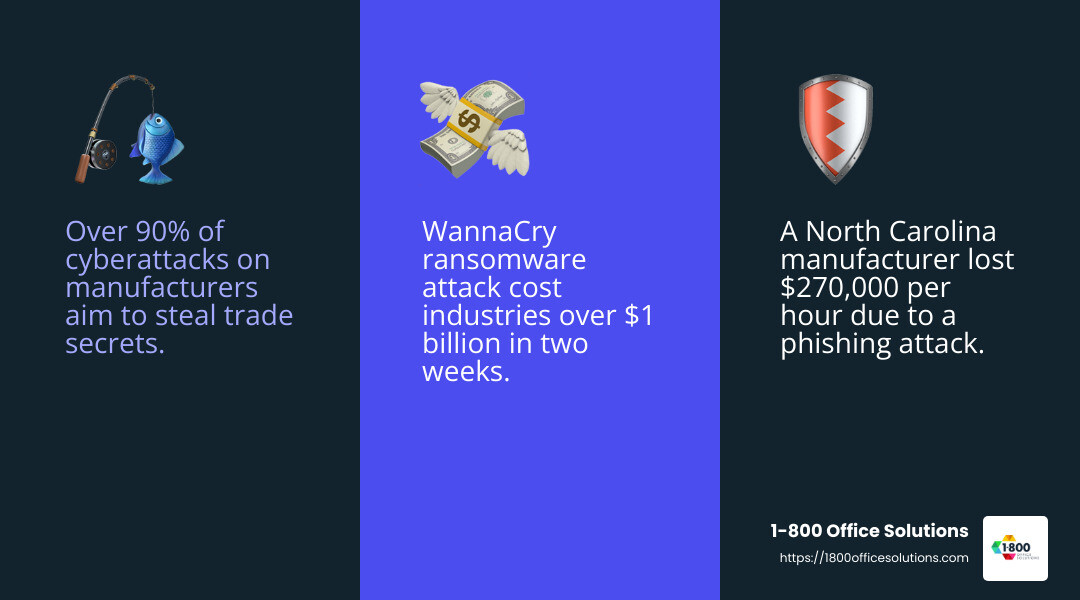
Consider this: a North Carolina manufacturer once lost an astounding $270,000 per hour due to a cyberattack on their IT systems. Such incidents highlight the potentially devastating impact of phishing attacks on manufacturing operations.
Ransomware: Holding Data Hostage
Ransomware is malicious software that encrypts a victim’s data, demanding a ransom for the decryption key. The infamous WannaCry attack, which cost various industries over $1 billion in just two weeks, revealed how vulnerable manufacturing systems can be. Often, these attacks start with a simple email attachment.
Manufacturers are particularly at risk because many still use outdated systems that are easy targets for ransomware. Without proper email security, these attacks can halt production, leading to significant financial losses.
Malware: The Invisible Invader
Malware refers to any software designed to harm a computer system. In the context of manufacturing, malware can infiltrate networks via email and spread rapidly, compromising equipment and stealing intellectual property. This is especially concerning given that over 90% of cyberattacks on manufacturers aim to steal trade secrets.
Protecting Against These Threats
To combat these threats, manufacturers need to implement strong email security measures. This includes:
- Educating employees on the dangers of phishing and how to spot suspicious emails.
- Regularly updating all systems to patch vulnerabilities.
- Deploying secure email gateways to filter out malicious content.
By understanding and addressing these threats, manufacturers can better protect their operations and safeguard their valuable intellectual property. This proactive approach is essential in an industry where a single cyber incident can have long-lasting consequences.
Key Email Security Practices
In manufacturing, securing email communications is a must. With threats like phishing, ransomware, and malware lurking, implementing key email security practices can protect your business from costly disruptions.
Encryption: Keeping Data Safe
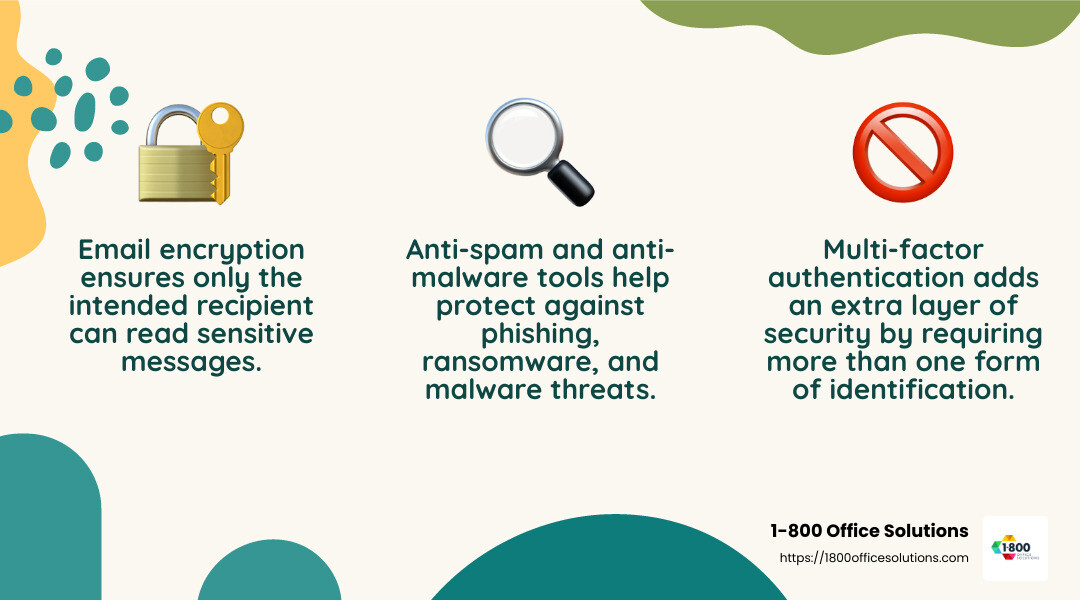
Email encryption is like locking your mail in a safe. It ensures that only the intended recipient can read the message. This is vital when sharing sensitive information like production specs or supplier contracts. By encrypting emails, you protect data from being intercepted by cybercriminals.
Manufacturers often handle proprietary information, making encryption a necessary layer of protection. It helps maintain trust with partners by ensuring that confidential data stays confidential.
Authentication: Who’s Really There?
Authentication verifies the identity of the person accessing an email account. Multi-factor authentication (MFA) is a recommended practice. It requires users to provide more than one form of identification before accessing an account.
For example, after entering a password, a user might need to enter a code sent to their mobile phone. This extra step makes it much harder for unauthorized users to gain access, even if they have a password.
Anti-Spam and Anti-Malware: The Gatekeepers
Spam and malware can flood inboxes, posing risks to manufacturing operations. Anti-spam tools filter out unwanted emails that could contain harmful links or attachments. Meanwhile, anti-malware solutions scan emails for malicious content, preventing malware from infiltrating systems.
A secure email gateway acts as a barrier between your network and potential threats. It quarantines suspicious emails, allowing only safe content to reach users. This proactive defense is essential in preventing attacks before they cause damage.
By adopting these key email security practices, manufacturers can protect their email communications from threats. Encryption, authentication, and anti-spam/anti-malware tools work together to safeguard sensitive information and maintain operational integrity.
Next, we’ll explore advanced email security solutions that can provide even greater protection for your manufacturing business.
Advanced Email Security Solutions
In the world of manufacturing, staying ahead of cyber threats is crucial. Advanced email security solutions offer robust defenses that go beyond basic protection. Let’s explore some key solutions: cloud-based platforms, secure email gateways, and threat protection.
Cloud-Based Platforms: Flexible and Scalable
Cloud-based email security platforms are like having a security guard that never sleeps. They provide real-time protection against threats by constantly updating with the latest security measures. This flexibility means manufacturers can scale their security as their business grows.
With cloud integration, employees can access emails securely from anywhere, whether they’re on the factory floor or visiting a supplier. This ensures that communication remains seamless without compromising security.
Secure Email Gateways: The First Line of Defense
Think of a secure email gateway as a fortress wall protecting your email system. It scans all incoming and outgoing emails for suspicious content. This includes filtering out spam, phishing attempts, and malware before they reach your inbox.
According to a study, Mimecast’s secure email gateway was found to be 53% more effective at preventing security incidents compared to other solutions. This highlights the importance of choosing a reliable gateway to keep threats at bay.
Threat Protection: Stay a Step Ahead
Threat protection tools are like detectives, sniffing out potential dangers before they strike. They use advanced techniques like sandboxing to open and test email attachments in a safe environment. This ensures that any malicious behavior is detected before it can harm your systems.
Fortinet FortiMail, for example, integrates with other security systems to automate threat response, enhancing your overall security posture. By leveraging such tools, manufacturers can proactively defend against evolving cyber threats.
By adopting these advanced email security solutions, manufacturers can significantly bolster their defenses against cyber threats. Cloud-based platforms, secure email gateways, and comprehensive threat protection work together to provide a robust shield for your manufacturing operations.
Next, we’ll explore best practices for maintaining email security in the manufacturing sector.
Email Security for Manufacturing: Best Practices
In the manufacturing world, email is a critical tool for communication. But it also opens the door to cyber threats. By following these best practices, manufacturers can protect their email systems and keep operations running smoothly.
Security Awareness Training
Employees are often the last line of defense against cyber threats. Security awareness training is essential to educate them about the dangers lurking in emails. Through regular training sessions, employees learn to spot phishing scams, suspicious attachments, and other email-based threats.
A case study from At-Bay showed that after a few months of security training, manufacturers saw a significant drop in the number of employees falling for email scams. This proves that well-informed employees can be a powerful defense.
URL Defense
Many email threats start with a malicious link. URL defense involves scanning links in real time before they are clicked. This dynamic scanning helps prevent employees from accidentally visiting harmful websites.
For instance, Trend Micro’s email security solutions use URL filtering to block suspicious links. This proactive approach ensures that only safe links make it to the inbox, reducing the risk of malware infections.
Attachment Defense
Attachments can be sneaky carriers of malware. Attachment defense involves opening and testing attachments in a secure environment before they reach the inbox. This process, known as sandboxing, detects malicious behavior like ransomware attempts.
Data from a cybersecurity report highlighted that manufacturers with strong attachment defenses were 60% less likely to experience ransomware attacks. This underscores the importance of having robust systems to handle email attachments safely.
By implementing these best practices—security awareness training, URL defense, and attachment defense—manufacturers can significantly improve their email security. These measures work together to create a safer email environment, protecting against the changing landscape of cyber threats.
Next, we’ll address some frequently asked questions about email security in manufacturing.
Frequently Asked Questions about Email Security for Manufacturing
What are the three types of email security?
When it comes to email security for manufacturing, there are three primary types you should focus on: encryption, authentication, and anti-spam/anti-malware measures.
- Encryption: This protects the content of your emails by scrambling the information, ensuring only authorized parties can read it. It’s like sealing a letter in an envelope instead of sending it as a postcard.
- Authentication: This involves verifying the identity of the person sending or accessing an email. Multi-factor authentication (MFA) is a robust method, requiring more than just a password to log in. It might include a code sent to your phone or a fingerprint scan, making unauthorized access much harder.
- Anti-Spam/Anti-Malware: These tools filter out unwanted and harmful emails before they reach your inbox. They help block phishing attempts, spam, and malicious software, keeping your systems safe.
What security type to use for email?
For maximum protection, manufacturers should use a combination of strong passwords and multi-factor authentication.
- Strong Passwords: A strong password is long, unique, and difficult to guess. Avoid using easy-to-guess information like birthdays or common words. Instead, use a mix of letters, numbers, and symbols.
- Multi-Factor Authentication: As mentioned earlier, MFA adds an extra layer of security. Even if a password is compromised, MFA can prevent unauthorized access. It’s one of the most effective ways to secure email accounts.
What is a good security practice for email?
A good security practice is to be vigilant about phishing awareness and to avoid public Wi-Fi for accessing sensitive information.
- Phishing Awareness: Educate yourself and your employees about recognizing phishing emails. These emails often disguise themselves as legitimate messages but aim to steal sensitive information. Look out for suspicious sender addresses, unexpected attachments, and urgent requests for personal data.
- Avoid Public Wi-Fi: Public Wi-Fi networks are convenient but often insecure. Avoid accessing sensitive emails or entering login credentials when connected to public Wi-Fi. If necessary, use a Virtual Private Network (VPN) to secure your connection.
By understanding and implementing these email security practices, manufacturers can better protect themselves against cyber threats. Each measure adds a layer of defense, making it harder for cybercriminals to succeed.
In the next section, we’ll explore how 1-800 Office Solutions can help improve email security for the manufacturing sector.
Conclusion
In today’s digital landscape, protecting email systems is crucial, especially for the manufacturing sector. As we’ve seen, email security for manufacturing is not just a technical necessity but a strategic imperative. Cyber threats targeting this industry can lead to significant financial losses, intellectual property theft, and reputational damage.
Manufacturers are particularly vulnerable due to their reliance on email for critical communications. From coordinating production schedules to negotiating with suppliers, email is an essential tool. However, this reliance also makes it a prime target for cybercriminals. Attacks like the infamous WannaCry ransomware have shown how devastating an email-borne threat can be, causing billions in damages.
1-800 Office Solutions understands these risks and offers robust email security solutions custom to the unique needs of manufacturers. Our services are designed to protect against phishing, malware, and unauthorized access, ensuring that your business operations remain uninterrupted.
By leveraging our expertise, manufacturers can implement effective security measures such as encryption, authentication, and anti-spam/anti-malware tools. We also provide security awareness training to help your team recognize and respond to potential threats.
In conclusion, the importance of email security cannot be overstated. As cyber threats continue to evolve, manufacturers must stay vigilant and proactive in protecting their email systems. With 1-800 Office Solutions as your partner, you can improve your security posture and safeguard your business against potential cyberattacks.
For more information on how we can help secure your email communications, visit our Email Security Solutions page. Let us help you fortify your defenses and ensure peace of mind in today’s challenging cybersecurity landscape.