



4 Office Tech Controls Investment Firms Need in 2026

Investment firms are heading into 2026 with more tech complexity, tighter regulations, and a greater need to protect client data.
As digital workflows expand and more services rely on interconnected systems, the right office‑tech controls can determine whether a firm stays efficient, compliant, and resilient.

1. Strengthened Access‑Control and Identity Management
Access‑control systems are evolving quickly, and firms can no longer rely on basic logins or manual permission reviews.
Modern identity management focuses on layering security, detecting risks in real time, and limiting what each user can reach inside the firm’s environment.
Adaptive Authentication
Some firms are updating their identity systems based on research showing how employee behavior and contextual login signals strengthen digital resilience.
For example, financial‑sector teams benefit from adaptive controls that adjust when user activity seems unusual, helping reduce credential‑related risks.
Role‑Based and Time‑Bound Permissions
Firms are increasingly relying on permission structures that limit access based on the user’s role and the timeframe in which they need information.
Time‑bound permissions automatically expire after a project ends or when access is no longer relevant, reducing exposure across sensitive systems.
Automated Access Reviews
Automated review cycles now remove outdated permissions before they become a weak spot, freeing teams from maintaining unwieldy permission spreadsheets.
2. Continuous Third‑Party and Vendor‑Risk Monitoring
Vendors are deeply connected to how investment firms operate, from data storage to compliance reporting.
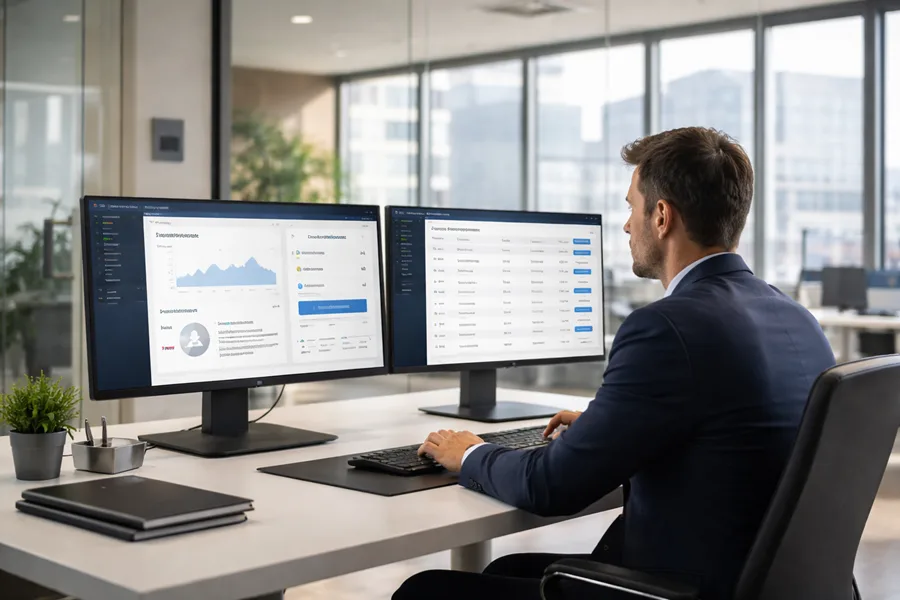
With broader tech ecosystems comes more risk, making continuous vendor monitoring essential in 2026.
Incorporating effective link building software can help investment firms track their digital presence and monitor the reputation of key third-party vendors online. This proactive approach adds another layer of oversight, supporting continuous vendor-risk monitoring.
Why Vendor Visibility Matters
Major regulatory updates around operational resilience are increasing scrutiny on external‑technology providers.
Some key cloud services have even been designated critical third‑party providers, reinforcing the need for investment firms to maintain strong oversight of vendor reliability and data‑handling practices.
Enhanced Oversight for Technology Partners
Investment firms are also rethinking how they evaluate third‑party technologies, since gaps in vendor practices can ripple into daily operations.
This is especially important for firms that blend innovation with client‑focused strategies, such as Abacus, which is known for its alternative‑asset approach and lifespan‑based financial solutions.
When a firm already embraces advanced technology as part of its broader identity, maintaining clear visibility into how outside tools handle data, integrate with internal systems, and support long‑term financial planning becomes a practical necessity rather than a technical afterthought.
Centralized Vendor‑Risk Dashboards
Consolidated dashboards help teams track vendor performance, compliance posture, and integration health in real time.
This reduces fragmentation and makes it easier to respond when issues appear.
3. Automated Threat‑Detection and Incident‑Response Systems
Threat‑detection tools continue to improve, and investment firms can no longer rely on manual log reviews to stay secure.
Automated systems provide quicker detection, clearer insights, and faster reaction times.
AI‑Enhanced Monitoring
Modern threat‑monitoring platforms use machine learning to spot anomalies across networks, devices, and cloud solutions.
And adaptive frameworks help financial organizations protect mobile and cloud‑based environments.
Automated Isolation and Containment
When threats emerge, automated systems can isolate compromised sessions in seconds, stopping incidents from spreading across the network.
Response Playbooks
Digital playbooks triggered by alerts initiate notifications, documentation, and containment steps.
This helps firms stay compliant while reducing stress during high‑pressure incidents.
4. Device‑Management and Secure Endpoint Controls
Lastly, with more investment firms supporting flexible and hybrid work arrangements, endpoint‑security controls have become central to tech‑control strategy.
Standardized Device Configurations
Consistent device builds reduce misconfigurations, ensuring the same protection levels across the firm.
Remote Wipe and Lock
Lost or stolen devices can be wiped remotely, keeping confidential information from being accessed improperly.
Patch Automation
Automated patching keeps systems current without waiting for employees to run updates manually.