

Maximizing Office Efficiency: Leasing Solutions for Modern Businesses

From small startups to large corporations, every organization seeks to streamline operations, minimize costs, and maintain flexibility. One often-overlooked aspect of achieving this balance is how businesses acquire and manage their office machinery.
Leasing office equipment, rather than purchasing it outright, has emerged as a smart solution for businesses aiming to stay agile while meeting their operational needs. This article explores the benefits of leasing office machinery, the tools available to manage lease agreements, and how businesses can make informed decisions about their leasing options.
The Growing Popularity of Leasing Office Equipment
Leasing office equipment has become an increasingly popular choice for businesses. According to the Equipment Leasing and Finance Association (ELFA), nearly 80% of U.S. companies lease or finance their equipment, underscoring the appeal of this flexible option.
The reasons for this shift are clear. Office technology evolves rapidly, and leasing allows companies to keep up with the latest advancements without the significant upfront costs of purchasing. Additionally, leasing provides predictable monthly expenses, aiding in budget management.
Benefits of Leasing Office Machinery
Leasing office equipment offers numerous advantages over outright ownership. Here are some of the key benefits:
- Cost Efficiency: Leasing requires lower upfront investment compared to purchasing, freeing up capital for other business needs.
- Access to Upgraded Technology: Leased equipment can be easily upgraded at the end of the lease term, ensuring access to the latest tools.
- Tax Benefits: Lease payments are often tax-deductible as an operational expense, offering potential financial advantages.
- Reduced Maintenance Hassle: Many leasing agreements include maintenance and repair services, reducing the burden on in-house staff.
- Flexibility: Short-term leases allow businesses to adjust their equipment needs as they grow or downsize.
These benefits make leasing an appealing option for businesses aiming to remain competitive in a constantly changing marketplace.
Deciding What Office Equipment to Lease
Not all office equipment needs to be leased. Some items, particularly those with long lifespans and infrequent updates, may be better suited for purchase.
Commonly Leased Office Equipment
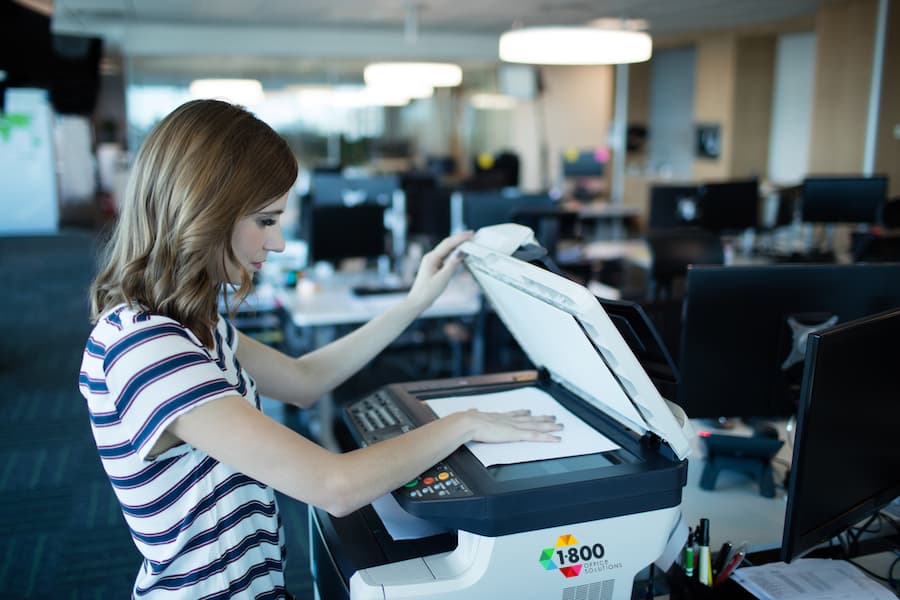
- Printers and Copiers: High-tech models with frequent updates make leasing an attractive option.
- Computers and Laptops: Leasing ensures access to the latest models without the depreciation costs.
- Telecommunications Systems: Includes phone systems and video conferencing tools, which often require upgrades.
- Specialized Machinery: Large-scale equipment like plotters or 3D printers can be cost-prohibitive to buy outright.
By evaluating your office’s specific needs, you can determine which items are best suited for leasing versus purchasing.
Managing Lease Agreements
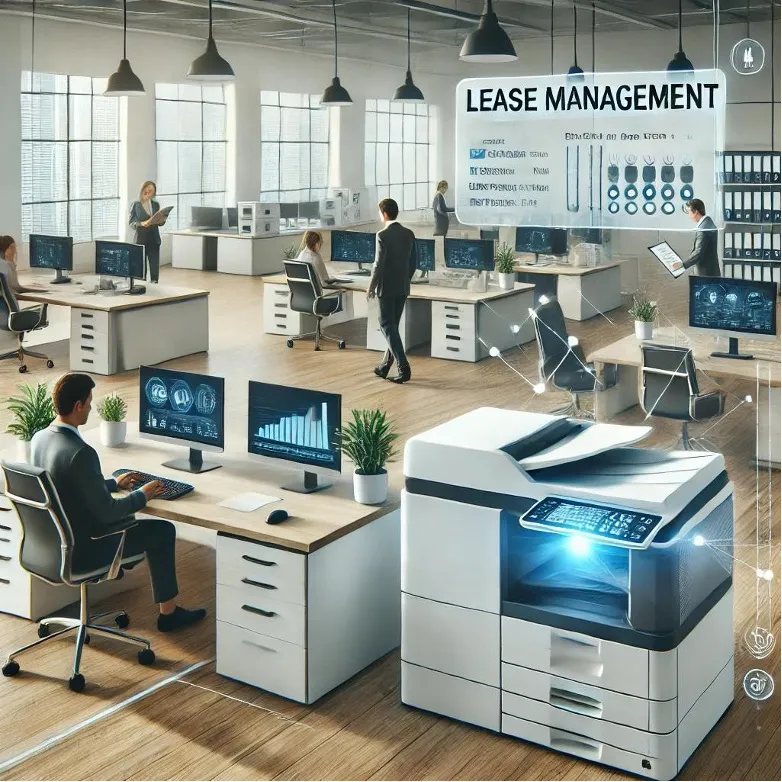
Leasing office equipment comes with its own set of challenges, particularly when it comes to tracking multiple agreements, payment schedules, and equipment lifecycles. This is where tools like LeaseQuery software come into play.
LeaseQuery software is designed to simplify the management of lease agreements, ensuring compliance with accounting standards like ASC 842 and providing detailed insights into lease portfolios. For businesses leasing multiple pieces of office equipment, such tools can be invaluable for maintaining organization and transparency.
Benefits of Lease Management Tools
- Centralized Records: Keep all lease information in one place for easy access.
- Compliance Assurance: Stay aligned with lease accounting standards.
- Budget Tracking: Monitor expenses and anticipate upcoming payments.
- Lifecycle Management: Know when leases are ending to plan upgrades or renewals.
By leveraging technology to manage leases, businesses can save time and reduce errors, allowing teams to focus on core operations.
Considering Environmental Impact
Sustainability is an increasingly important factor for businesses today. Leasing office equipment aligns with environmentally conscious practices in several ways:
- Reduced Waste: Leased equipment is often refurbished and reused by leasing companies, minimizing landfill contributions.
- Energy Efficiency: Leased equipment is more likely to include newer, energy-efficient models.
- Recycling Programs: Many leasing companies offer take-back programs to recycle old equipment responsibly.
By choosing leasing, businesses can contribute to sustainability goals while meeting their operational needs.
Tips for Successful Leasing
To make the most of your leasing agreements, it’s essential to approach the process strategically.
How to Optimize Equipment Leasing
- Assess Your Needs: Understand which equipment is essential and how often it needs upgrading.
- Compare Leasing Terms: Evaluate multiple providers to find competitive rates and flexible terms.
- Understand Hidden Costs: Be aware of additional fees, such as maintenance charges or penalties for early termination.
- Plan for Upgrades: Choose leases that allow for seamless upgrades to new technology.
- Track Your Agreements: Use tools like LeaseQuery software to stay organized and ensure compliance.
By following these steps, you can maximize the benefits of leasing while avoiding potential pitfalls.
Final Thoughts
Leasing office equipment is more than a financial decision—it’s a strategic move that supports business growth, flexibility, and sustainability. From high-tech printers to telecommunications systems, leasing allows companies to stay ahead of technological advancements without the burden of ownership.
By integrating tools like LeaseQuery software and adopting a thoughtful approach to lease management, businesses can ensure they get the most out of their leasing agreements. With the right strategy, leasing becomes not just a convenience, but a competitive advantage in today’s dynamic business landscape.