

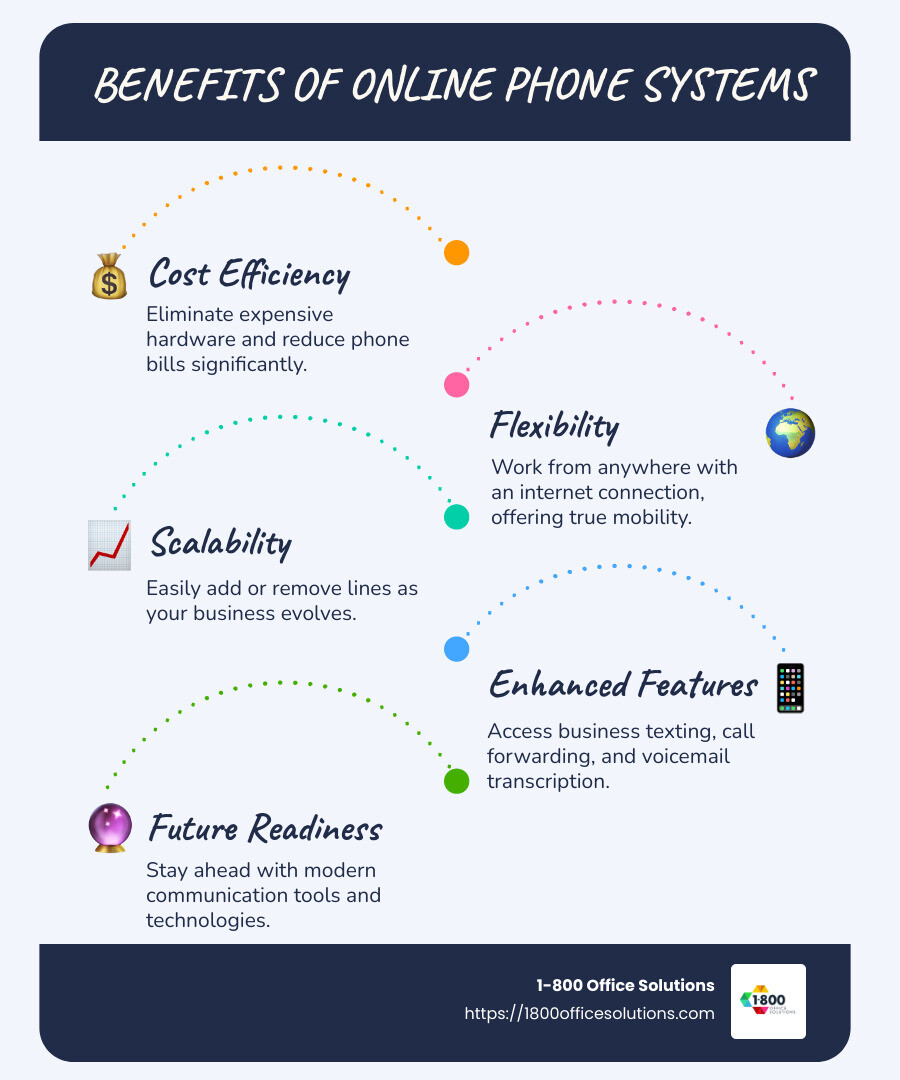
Online phone systems are revolutionizing how businesses manage their communications by using the internet instead of traditional phone lines. This shift offers numerous advantages:
- Cost Efficiency: No need for expensive hardware; reduce phone bills.
- Flexibility: Work from anywhere with an internet connection.
- Scalability: Easily add or remove lines as your business changes.
- Improved Features: Enjoy business texting, call forwarding, and voicemail transcription.
Whether you’re an office manager looking for a cutting-edge communication solution or just curious about how these systems can boost productivity, understanding online phone systems is key. They offer not only significant cost savings but also the flexibility and advanced features that modern businesses crave.
Key online phone systems vocabulary:
Understanding Online Phone Systems
Online phone systems are changing business communications by leveraging the power of the internet. At the heart of these systems are three key components: virtual phone systems, web-based phone systems, and VoIP technology.
Virtual Phone System
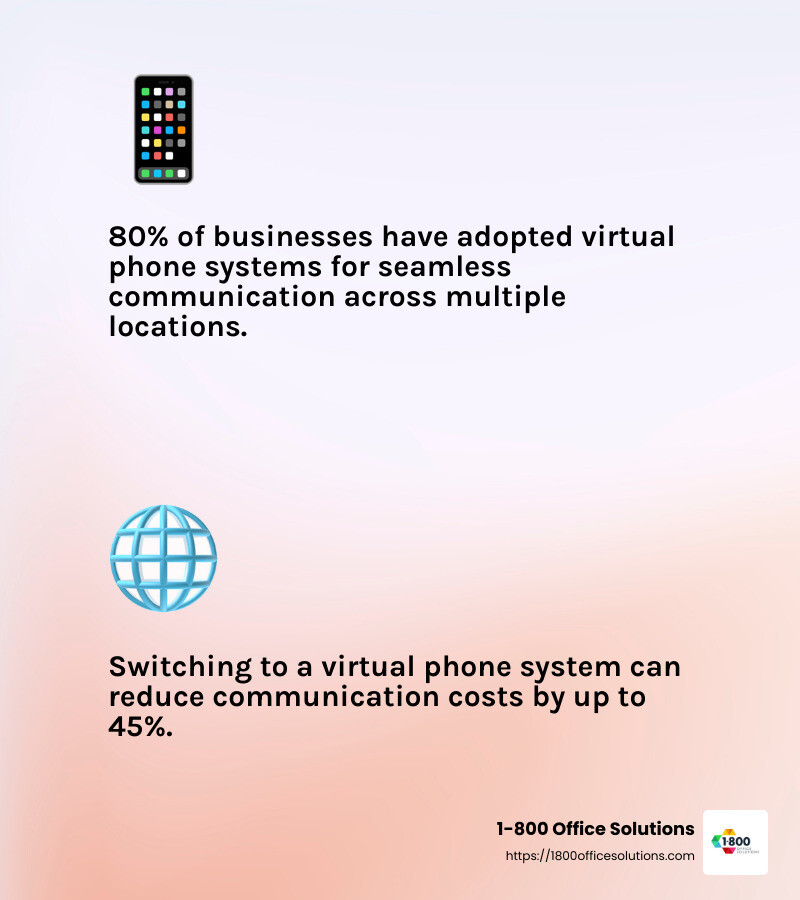
A virtual phone system is a cloud-based solution that enables users to make and receive calls from anywhere using their laptop or mobile device. This system eliminates the need for bulky hardware like servers or traditional phone lines.
Imagine a sales team spread across different states—Florida, Illinois, and Georgia—yet all connected seamlessly through a virtual phone system. Each team member can use business numbers on their personal devices, ensuring privacy and professionalism.
Key Benefits:
- Mobility: Work from any location.
- Customization: Choose from toll-free, vanity, or local numbers.
- Integration: Combine with other business tools for streamlined operations.
Web-Based Phone System
Web-based phone systems are essentially phone systems that operate over the internet using cloud technology. These systems integrate various communication methods like voice, video, and messaging into one platform.
For example, a small business in Massachusetts can use a web-based phone system to manage client calls, video conferences, and team messages without the need for multiple service providers.
Advantages Include:
- Unified Communications: Combine all communication needs into one system.
- Cost Savings: Reduce costs by eliminating multiple communication tools.
- Real-Time Collaboration: Improve productivity with instant communication.
VoIP Technology
Voice over Internet Protocol (VoIP) is the technology that makes online phone systems possible. VoIP converts voice into digital signals, allowing calls to be made over the internet instead of traditional phone lines.
This technology is what makes it possible for businesses in Arkansas and North Carolina to connect with clients and partners worldwide without incurring high long-distance charges.
VoIP Features:
- High-Quality Calls: Enjoy clear, uninterrupted communication.
- Scalability: Easily adjust the number of lines as your business grows.
- Advanced Features: Access voicemail-to-email, call forwarding, and more.

By understanding these components, businesses can better appreciate how online phone systems provide a robust, flexible, and cost-effective solution for modern communication needs. Whether you’re a small startup or a large enterprise, these systems offer the tools needed to stay connected and competitive in today’s digital age.
Key Features of Online Phone Systems
Online phone systems come packed with features that make business communication seamless and efficient. Let’s explore some of the key features that can transform how your team communicates.
Desktop App
A desktop app allows employees to access the phone system right from their computers. This means you can make calls, send messages, and manage contacts all from a single platform. For example, a marketing team in Chicago can quickly switch between tasks on their computer without missing important calls or messages.
Benefits of a Desktop App:
- User-Friendly Interface: Easy to steer and manage calls.
- Integration: Sync with other business apps for a unified experience.
- Convenience: Access all phone features without needing a separate device.
Mobile App
The mobile app feature ensures that your team stays connected even when they’re on the move. Whether they’re in Orlando or traveling to a client meeting in Michigan, employees can use their smartphones to manage calls, texts, and voicemails.
Advantages of a Mobile App:
- Flexibility: Work from anywhere with an internet connection.
- Real-Time Updates: Get instant notifications for calls and messages.
- Privacy: Use business numbers on personal devices to maintain professionalism.
Call Forwarding
Call forwarding is a crucial feature that ensures no call goes unanswered. If someone is unavailable, calls can be automatically redirected to another team member or device. Imagine a customer service team in Pennsylvania that never misses a call, even during lunch breaks or after hours.
Call Forwarding Highlights:
- Seamless Transfers: Redirect calls to any device or team member.
- Customer Satisfaction: Ensure clients always reach a live person.
- Efficiency: Reduce voicemail overload and missed opportunities.
Voicemail Transcription
Voicemail transcription converts voice messages into text, making it easy to read and respond to messages quickly. This feature is especially useful for busy executives in North Carolina who can read voicemails during meetings without disrupting their flow.
Why Voicemail Transcription is Useful:
- Time-Saving: Quickly scan and prioritize messages.
- Accessibility: Read voicemails in noisy environments.
- Easy Reference: Keep a text record of important messages.
Business Texting
Business texting allows your team to send and receive text messages using their business number. This feature is perfect for quick updates or reminders, like a tech team in Massachusetts coordinating a project rollout.
Perks of Business Texting:
- Instant Communication: Send quick updates without making a call.
- Professionalism: Use business numbers for all communications.
- Engagement: Reach clients through their preferred communication method.
These features make online phone systems a powerful tool for businesses looking to improve their communication capabilities. With the right features in place, your team can work more efficiently and stay connected, no matter where they are.
Next, we’ll explore how these systems offer cost-effective, flexible, and scalable solutions for businesses of all sizes.
Benefits of Using Online Phone Systems
Online phone systems offer a range of benefits that make them a smart choice for businesses of all sizes. Let’s take a look at why they’re a game-changer.
Cost-Effective
One of the biggest advantages of using an online phone system is the cost savings. Traditional phone systems can be expensive due to hardware costs, installation fees, and ongoing maintenance. In contrast, online systems eliminate the need for physical equipment and offer subscription-based pricing. This means you only pay for what you use, making it budget-friendly for both small businesses and large enterprises.
Key Cost Benefits:
- No Hardware Costs: Save money by using existing devices.
- Subscription Plans: Pay only for the features you need.
- Reduced Maintenance: Minimize costs associated with repairs and updates.
Flexibility
Online phone systems provide best flexibility for your team. Employees can work from anywhere—whether they’re at home, in the office, or on the road. This flexibility is crucial for businesses with remote teams, like a startup in Arkansas or a consultant in Georgia. With features like mobile apps and call forwarding, your team can stay connected no matter where they are.
Flexible Work Benefits:
- Remote Access: Work from any location with internet access.
- Device Integration: Use smartphones, tablets, or laptops seamlessly.
- Adaptability: Easily scale up or down based on business needs.
Scalability
As your business grows, your communication needs will change. Online phone systems are highly scalable, allowing you to add or remove users and features as required. Whether you’re expanding your team in Michigan or downsizing in Massachusetts, these systems can adapt to your changing needs without a hitch.
Scalability Highlights:
- Easy Expansion: Add new lines or features quickly.
- Customizable Plans: Tailor your system to fit your business size.
- Future-Proof: Stay ahead with the latest features and integrations.
No Hardware Needed
Forget about cluttered desks filled with bulky phone equipment. Online phone systems operate entirely in the cloud, meaning there’s no need for physical hardware. This not only saves space but also reduces the hassle of dealing with hardware malfunctions or upgrades.
Advantages of No Hardware:
- Space-Saving: Free up office space for other uses.
- Simplified Setup: Get started without complicated installations.
- Reduced Downtime: Avoid disruptions from hardware failures.
These benefits make online phone systems an attractive option for businesses looking to streamline their communication processes, save money, and adapt to the modern work environment.
Next, we’ll guide you on how to choose the right online phone system based on your business needs and budget.
How to Choose the Right Online Phone System
Choosing the right online phone system for your business can feel overwhelming. But, by focusing on a few key areas, you can find a system that fits your needs perfectly.
Business Needs
First, consider your specific business requirements. Ask yourself:
- How many employees need access to the phone system?
- What type of communication do you prioritize: calls, texts, or video?
- Do you have remote workers who need seamless connectivity from various locations?
Understanding your business needs will help you pick a system that supports your operations. For instance, a company in Orlando with a large sales team might prioritize call management features, while a startup in Chicago might want robust video conferencing tools.
Budget
Budget is crucial when selecting an online phone system. These systems are generally more cost-effective than traditional ones, but costs can still add up if you’re not careful.
- Subscription Plans: Look for plans that match your usage. Some systems offer pay-as-you-go options, while others provide flat-rate packages.
- Hidden Fees: Watch out for any additional costs for premium features or international calls.
- Trial Periods: Many providers offer free trials. Use these to test out the system before committing.
Choosing a system that aligns with your budget ensures you get the features you need without overspending.
Features
Features can make or break your experience with an online phone system. Here are some to consider:
- Call Forwarding: Ensures calls reach the right person, even if they’re away from their desk.
- Voicemail Transcription: Converts voicemails to text for easier management.
- Business Texting: Allows quick communication with clients or team members.
- Mobile and Desktop Apps: Keep your team connected on any device.
Make a list of must-have features and compare them across different providers to find the best fit.
Support
Reliable support is essential, especially when technical issues arise. Consider the following:
- 24/7 Support: Does the provider offer round-the-clock assistance?
- Multiple Support Channels: Look for providers that offer phone, chat, and email support.
- Customer Reviews: Check reviews to see how other users rate the provider’s support.
Good support ensures you can resolve issues quickly, keeping your business running smoothly.
By focusing on these areas, you can choose an online phone system that meets your business needs, fits your budget, offers the right features, and provides reliable support. This choice will empower your business to communicate effectively and efficiently.
Next, we’ll address some frequently asked questions about online phone systems to help you further understand this technology.
Frequently Asked Questions about Online Phone Systems
What is a virtual phone system?
A virtual phone system is an internet-based solution that lets you make and receive calls from anywhere using your laptop or smartphone. Unlike traditional phone systems, virtual ones don’t require bulky hardware. They use the internet to connect calls, offering flexibility and mobility. This is perfect for businesses with remote workers or multiple locations, such as those in Orlando or Chicago.
What is a web-based phone system?
A web-based phone system operates in the cloud, meaning all the necessary software and data are stored online. This system uses VoIP (Voice over Internet Protocol) technology to transmit voice calls over the internet instead of traditional phone lines. By leveraging cloud technology, businesses can enjoy seamless communication without the need for physical infrastructure. This makes it easier to scale and manage your phone system, no matter where your team is located.
What is a VoIP phone system?
A VoIP phone system enables voice calls using a broadband internet connection. Instead of relying on traditional phone lines, VoIP converts your voice into digital data packets and sends them over the internet. This technology not only supports voice calls but can also handle video calls, making it a versatile communication tool. VoIP systems are known for being cost-effective and easy to integrate with other digital tools, making them a popular choice for businesses looking to modernize their communication solutions.
By understanding these key terms, you’ll have a clearer picture of how online phone systems can transform your business communication.
Conclusion
As we look to the future, online phone systems are set to revolutionize how businesses communicate. At 1-800 Office Solutions, we are committed to helping you steer this digital change with ease. Our expertise in business phone systems ensures you get the most out of these innovative technologies.
Online phone systems offer a flexible and scalable solution, perfect for businesses of all sizes. They eliminate the need for bulky hardware and provide the freedom to connect from anywhere. This is particularly beneficial for businesses with multiple locations, like those in Orlando, Chicago, and beyond.
The future of business communication is all about integration and mobility. With features like mobile apps, voicemail transcription, and business texting, online phone systems are designed to meet the evolving needs of modern businesses. They enable seamless communication and collaboration, whether your team is in the office or working remotely.
At 1-800 Office Solutions, we are here to guide you through this transition. Our business phone system solutions are custom to your unique needs, ensuring you stay connected and competitive in an ever-changing landscape.
Accept the future with confidence. Let us help you harness the power of online phone systems to drive your business forward.