

Business phone systems are the backbone of modern business communication, making sure you’re always seamlessly connected with clients, partners, and employees. For tech-savvy office managers, integrating the right system is crucial to maintaining smooth operations and boosting productivity without unnecessary disruptions.
When it comes to selecting a business phone system, consider these key factors:
- Scalability: Ensure the system can grow with your business.
- Features: Look for AI tools, video capabilities, and robust analytics.
- Cost-effectiveness: Balance upfront costs with long-term value.
- Integration: Choose systems that integrate well with your current IT infrastructure.
In today’s world, the choice between traditional landlines, VoIP, and cloud-based systems can greatly impact a company’s success. Effective communication solutions not only improve efficiency but also ensure that no opportunities are missed due to outdated technology. As businesses evolve, their communication systems must keep pace, providing reliability and flexibility that can make or break their bottom line.
Understanding Business Phone Systems
VoIP: The Modern Marvel
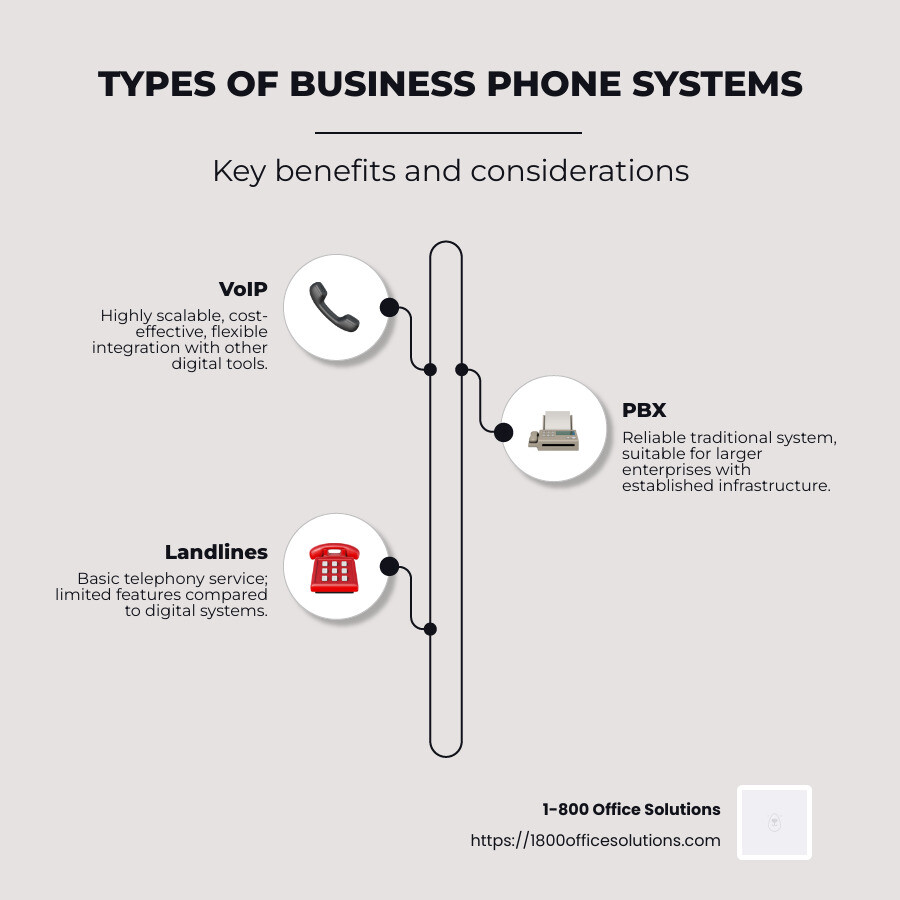
Voice over Internet Protocol (VoIP) is changing the way businesses communicate. Instead of old-school phone lines, VoIP uses the internet to make calls. This shift means you can make calls from anywhere with an internet connection—perfect for remote work! Businesses love VoIP because it cuts costs and offers tons of features like call recording, auto attendants, and CRM integrations.
VoIP systems thrive on scalability. As your business grows, you can easily add more lines or features without needing new hardware. This flexibility is a big reason why many companies are making the switch.
PBX: The Traditional Powerhouse
Private Branch Exchange (PBX) systems have been around for a while. They handle multiple calls within a company and connect them to outside lines. PBX is great for larger businesses with lots of departments and employees. It offers features like call logging and automated routing, which helps improve customer service.
However, PBX systems can be costly to set up and maintain. They often require on-premises hardware, which isn’t as flexible as cloud-based solutions.
Landlines: A Legacy Choice
Traditional landlines are becoming less common, but some businesses still use them. They’re known for reliability, but they lack the advanced features of VoIP or PBX systems. Landlines can be expensive and limiting, especially as businesses grow and need more versatility.
Scalability and Cost-Effectiveness
Scalability is key when choosing a business phone system. You need something that can grow with your company without breaking the bank. VoIP systems shine here, offering easy upgrades and pay-as-you-go pricing models.
In contrast, traditional PBX and landline systems often involve higher upfront costs and ongoing maintenance fees. This makes VoIP a more cost-effective choice for many businesses.
In conclusion, when selecting a business phone system, consider your company’s needs for scalability, features, and cost. VoIP systems often provide the best balance, offering flexibility and advanced features at a lower cost.
Next, we’ll dive into the top features you should look for in a business phone system to ensure it meets your company’s communication needs.
Top Features to Consider
When choosing a business phone system, certain features can make a huge difference. Let’s explore some of the top features that can improve your company’s communication capabilities.
AI Tools
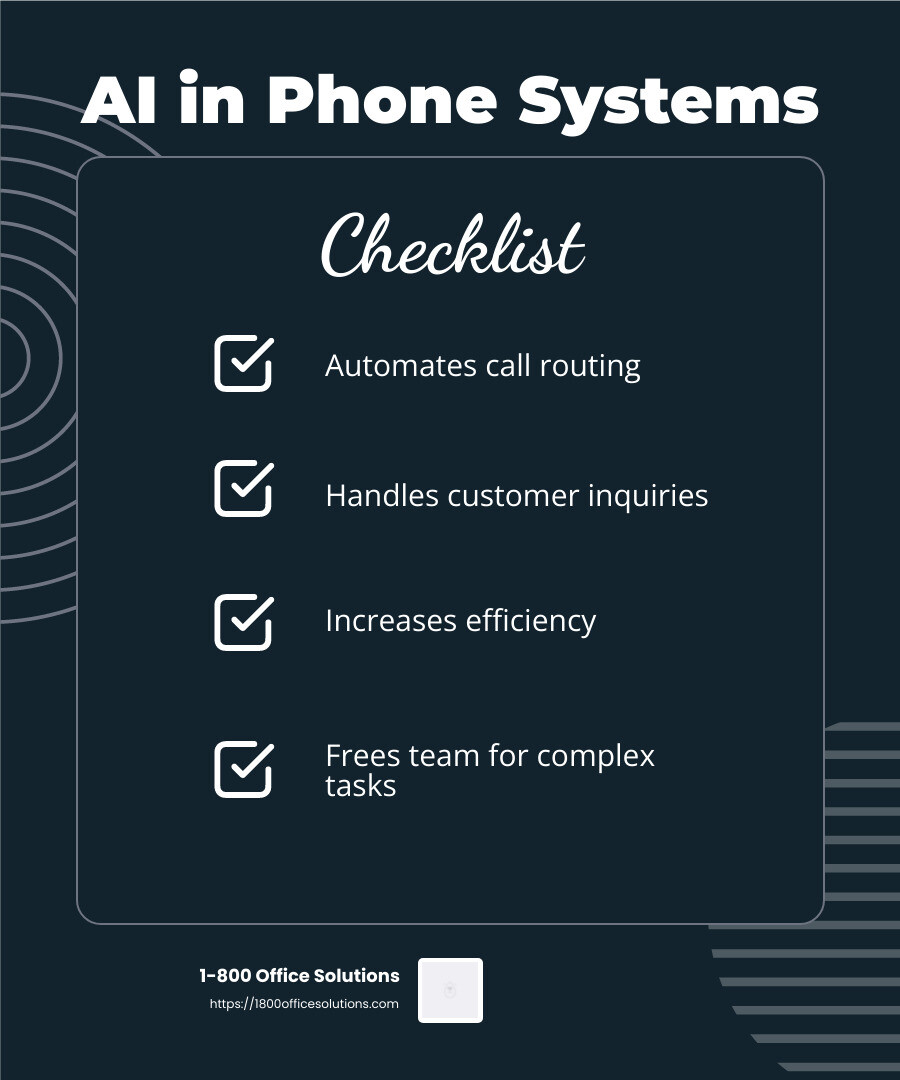
Artificial Intelligence (AI) is revolutionizing how businesses interact with customers. AI tools in phone systems can automate tasks like call routing and customer inquiries. This saves time and ensures customers get the help they need quickly. For example, AI chatbots can answer common questions, freeing up your team for more complex issues.
Video Capabilities
Video conferencing has become essential for modern businesses, especially with remote work on the rise. A phone system with robust video capabilities allows for seamless virtual meetings. Features like screen sharing, sidebar chats, and recording can improve collaboration and productivity. This is crucial for teams working across different locations.
Analytics
Analytics provide valuable insights into your communication patterns. With detailed call logs and reports, you can track performance metrics and identify areas for improvement. Advanced analytics help in understanding customer behavior and optimizing your service. This data-driven approach can lead to better decision-making and improved customer satisfaction.
Integrations
Integrating your phone system with other business tools is a game-changer. Whether it’s CRM systems like Salesforce or collaboration platforms like Microsoft Teams, integrations streamline operations. They ensure that all your tools work together, reducing manual data entry and improving workflow efficiency.
Customization
Every business has unique needs, and customization allows you to tailor the phone system to fit those needs. From setting up personalized call flows to customizing the user interface, flexibility is key. A customizable system can adapt as your business evolves, ensuring it remains a perfect fit over time.
Incorporating these features into your business phone system can significantly improve communication and efficiency. Next, we’ll compare different phone system options to help you find the best fit for your business.
Comparing Business Phone Systems
When it comes to choosing the right business phone system, understanding the differences between traditional and modern systems is crucial. Let’s explore the benefits of VoIP, compare traditional systems with modern ones, and look at how costs stack up.
VoIP Benefits
Voice Over Internet Protocol (VoIP) has transformed business communication. It’s not just about making calls over the internet; it’s about flexibility and functionality. With VoIP, businesses can enjoy features like unlimited calling, visual voicemail, and even integration with customer relationship management (CRM) systems. The flexibility to use existing devices—be it computers or smartphones—means businesses can save significantly on hardware costs.
Moreover, VoIP systems are incredibly scalable. As your business grows, adding new lines or features is just a few clicks away. This adaptability makes VoIP a popular choice among businesses looking to future-proof their communication infrastructure.
Traditional vs. Modern Systems
Traditional phone systems, like landlines and PBX (Private Branch Exchange), have been reliable workhorses for decades. They offer stability and are often seen as straightforward to use. However, they lack the advanced features and flexibility that modern systems provide.
Modern systems, particularly those based on cloud technology, offer a suite of advanced features. These include AI-powered tools for conversation intelligence, video conferencing capabilities, and detailed analytics. The ability to integrate with other business applications further improves their appeal. Businesses can streamline operations and improve productivity by unifying their communication tools.
While traditional systems might still be suitable for some, the trend is clear: businesses are moving towards modern, cloud-based solutions for their improved capabilities and flexibility.
Cost Comparison
Cost is a significant factor when comparing business phone systems. Traditional systems often involve high initial setup costs, including hardware and installation fees. Ongoing maintenance and upgrades can also add to the expenses.
In contrast, VoIP systems generally offer lower upfront costs. Many providers offer subscription-based models, which can be more predictable and manageable for businesses. According to a 2022 survey, businesses switching to VoIP services like RingCentral saw a 23% decrease in telecommunication costs and a 16% reduction in overall IT spend.
However, consider the total cost of ownership. While VoIP systems might have lower initial costs, factors like internet bandwidth and any additional features should be factored into the overall expense.
By evaluating these aspects, businesses can make informed decisions about which system aligns best with their needs and budget. In the next section, we’ll explore the top business phone systems for 2024, offering solutions custom to various business requirements.
5 Best Business Phone Systems of 2024
1-800 Office Solutions VoIP
Scalability and Ease of Use
1-800 Office Solutions VoIP is designed for businesses looking to scale effortlessly. As your business grows, adding new lines or features is seamless, thanks to its cloud-based infrastructure. This system is known for its user-friendly interface, ensuring a smooth experience for both tech-savvy users and those new to VoIP technology.
1-800 Office Solutions Collaboration Suite
Collaboration and Integrations
This suite is perfect for organizations that prioritize teamwork and connectivity. It offers robust video conferencing capabilities, ensuring that remote and in-office employees can collaborate effectively. The system integrates with popular business tools, allowing for a unified communication experience. Whether it’s sharing files during a meeting or scheduling a video call, the Collaboration Suite streamlines these processes, making it a valuable tool for enhancing team productivity.
1-800 Office Solutions Flex Phone
Flexibility and AI Tools
Flex Phone is the go-to choice for businesses requiring flexible communication solutions. It features AI tools that automate routine tasks, such as call routing and transcription. This not only saves time but also ensures that employees can focus on more critical tasks. Video conferencing is also a breeze with Flex Phone, making it ideal for businesses that need to connect with clients or team members across different locations.
1-800 Office Solutions Small Business Package
Small Business Focus and Cost-Effectiveness
Custom for small businesses, this package emphasizes affordability without compromising on features. Deployment is quick and hassle-free, allowing small business owners to get started with minimal setup time. The package includes essential features like call forwarding, voicemail, and auto-attendant, ensuring businesses have everything they need to maintain professional communication. Its cost-effectiveness is a major draw, helping small businesses manage their budgets while still accessing top-tier communication tools.
1-800 Office Solutions Sales Pro
Voice Intelligence and Sales Focus
Sales Pro is crafted for sales teams aiming to improve their communication strategies. It incorporates voice intelligence features that analyze calls in real-time, providing insights that can drive sales performance. The AI tools assist in generating actionable data, helping sales teams refine their approach and close deals more effectively. This system is not just about making calls; it’s about empowering sales teams with the information they need to succeed.
Each of these systems from 1-800 Office Solutions offers unique advantages, ensuring that businesses of all sizes and industries can find a solution that fits their specific needs. Whether it’s scalability, collaboration, flexibility, cost-effectiveness, or sales improvement, there’s a system designed to meet those demands.
Frequently Asked Questions about Business Phone Systems
How much does a small business phone system cost?
The cost of a small business phone system can vary significantly depending on the type of system you choose. VoIP systems are often more cost-effective compared to traditional landline systems. They typically range from $20 to $35 per user per month, which is considerably less than older systems that can cost $40 to $55 per month, plus additional charges for long-distance calls and hardware. By switching to VoIP, businesses can reduce telecommunication costs by up to 23% and hardware costs by 20%, according to a 2022 survey.
What is a business phone system called?
A business phone system is generally referred to by the technology it uses. Common types include:
• PBX (Private Branch Exchange): Ideal for larger businesses, it handles multiple calls simultaneously and offers features like call logging and automated routing.
• VoIP (Voice over Internet Protocol): Uses the internet to make calls, offering flexibility and advanced features without the need for extensive hardware.
• Traditional Systems: Often referred to as landlines, these systems use physical lines for communication and are becoming less popular due to their higher costs and lack of flexibility.
Is VoIP worth it for small businesses?
Absolutely. VoIP offers numerous benefits that make it a worthwhile investment for small businesses. Its scalability allows businesses to add or remove lines with ease, adapting to growth without significant additional costs. The cost-saving aspect is significant, as VoIP systems eliminate the need for expensive hardware and reduce long-distance call charges. Furthermore, VoIP provides flexibility, enabling employees to make and receive calls from anywhere with an internet connection, which is essential for remote work setups. Given these advantages, VoIP is a smart choice for small businesses looking to improve their communication systems efficiently.
Conclusion
Choosing the right business phone system is crucial for any company aiming to improve productivity and streamline communication. With so many options available, it’s essential to find a solution that aligns with your business’s unique needs and goals.
1-800 Office Solutions offers a range of custom phone systems that cater to various business requirements. Whether you’re looking for scalability, advanced features, or cost-effectiveness, our solutions are designed to support your business’s growth and efficiency.
By opting for a VoIP system, you can enjoy significant cost savings and flexibility. VoIP systems not only reduce telecommunication expenses but also eliminate the need for bulky hardware. This allows your team to communicate seamlessly from any location, a necessity in today’s remote work environment.
Moreover, integrating features like AI tools and video conferencing can greatly improve collaboration and productivity within your team. As highlighted in the research, modern business phone systems are not just about making calls—they’re about providing a comprehensive communication platform that supports your business operations.
At 1-800 Office Solutions, we are committed to helping you make informed decisions that will propel your business forward. Our expert support and flexible terms ensure that you have the right tools to improve workplace productivity and efficiency.
Investing in the right business phone system is more than just a purchase; it’s a strategic move towards future growth and success. With the right system in place, you can ensure seamless communication, improve customer satisfaction, and drive your business to new heights.