
What Is Backup as a Service (BaaS)?
What is Backup as a Service (BaaS)? Business owners often face data loss or system failures that disrupt operations. This post outlines key aspects of BaaS, including its essential benefits and various models available to companies. Office Equipment Supplier Expert explains how businesses mitigate risk, maintain continuity, and take control of data safety through managed backup services. Read on to learn how BaaS can address your data protection challenges.

Key Takeaways
- baas offers secure off-site data storage for efficient disaster recovery
- data compliance and security measures align with strict industry standards
- diverse backup models meet varied operational and recovery needs
- middleware integration and cost challenges complicate cloud backup adoption
- trends in automation improve data governance and operational resilience
What Is Backup as a Service (BaaS)?
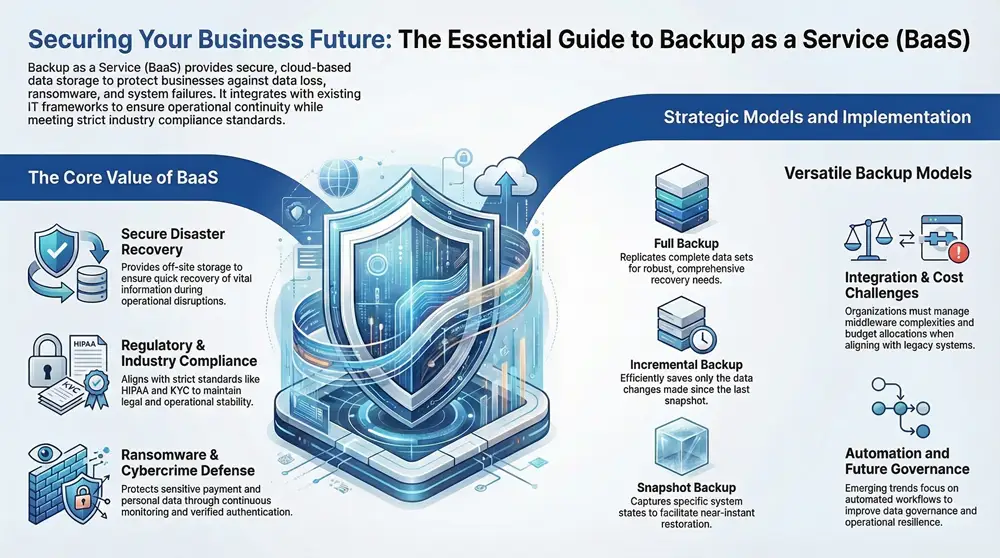
Backup as a service (BaaS) provides secure data storage over the cloud, ensuring that businesses maintain their critical information efficiently. This service supports disaster recovery strategies and meets various compliance requirements.
BaaS functions as a reliable extension of business technology that aligns well with platform as a service offerings; it integrates data backups with cloud management solutions seamlessly:
BaaS also benefits businesses by ensuring that processing logs and events are efficiently managed with tools like splunk, which further streamlines IT operations. This method offers a practical solution for companies that require secure, off-site data backups.
Service providers in the sector often publish insights on fintech weekly, highlighting trends and best practices for data management. Clients must adhere to know your customer protocols while relying on backup solutions that meet their operational standards.
Why Backup as a Service Is Essential for Modern Businesses
Modern businesses require secure backup methods to counter threats like cybercrime and ransomware, ensuring critical data remains safe and accessible when needed. Companies provide secure backup services by integrating solutions that verify an email address for authentication and user alerts.
Service providers enable businesses in baas banks to safeguard their data and meet strict compliance standards. A service such as acronis assists with a resilient backup infrastructure that covers data loss scenarios.
Secure backup options protect sensitive information against ransomware attacks and cybercrime risks. These services ensure that company data is maintained through continuous monitoring and verified email address authentication.
Businesses use backup as a service to bolster their risk management and operational resilience. A well-managed backup solution with features similar to acronis supports data integrity for institutions ranging from small enterprises to baas banks.
Key Features of Backup as a Service Solutions
Backup as a service solutions play a vital role in disaster recovery by ensuring seamless data restoration during incidents. These solutions integrate advanced computing technologies for prompt data recovery.
The platform incorporates tools similar to cohesity to secure and manage data efficiently. This technology supports consistent performance and reliability in data backups.
The service safeguards sensitive details such as credit card information through tight security measures. Businesses should appreciate the clear and direct approach used in maintaining data integrity.
These solutions comply with standards like the health insurance portability and accountability act, ensuring regulatory requirements are met. The focus on regulation supports operational stability and legal adherence for businesses.
How Businesses Benefit From Utilizing BaaS
BaaS streamlines management of critical information by providing a reliable platform for secure data backups, ensuring businesses maintain essential records. This system helps safeguard data against potential disaster scenarios.
The service offers comprehensive support for internal audit processes, enhancing the accuracy and completeness of financial transactions and records. It verifies that the information remains current and accessible at all times.
BaaS protects sensitive payment details while maintaining a secure environment, reducing exposure to fraudulent activities. This secure method supports ongoing compliance with industry standards and internal audit requirements.
The solution minimizes risks during disaster situations by ensuring rapid recovery of key information. It also improves data management, allowing businesses to concentrate on growth while preserving vital backup records.
Types of Backup as a Service Models Available
The service provider shows several backup models to suit any organization, each designed with a clear interface for easy use and reliable performance.
The available models offer various options for data protection, meeting digital banking and research needs efficiently:
The approach integrates digital banking practices with efficient research methodologies to create a seamless backup experience for an organization.
The service provider also supports open banking requirements by offering models that combine secure data storage with an intuitive interface, ensuring that every organization meets its backup needs swiftly.
Factors to Consider When Choosing a BaaS Provider
The provider’s experience in offering cloud backup solutions is crucial for businesses looking for the best cloud storage options. Their technical intelligence supports a smooth data recovery process and robust security measures.
Businesses value a partner’s experience when selecting cloud backup solutions that ensure data integrity and reliability. A service provider with deep industry intelligence offers competitive advantages in maintaining optimal operations.
Reliable backup solutions must provide the best cloud storage available in the market to safeguard critical data. This level of service requires thorough expertise and intelligence to address potential risks for all businesses.
Companies choose leaders in cloud backup solutions based on their proven experience and technical intelligence. Providers that deliver the best cloud storage empower businesses to manage data securely and effectively.
Common Use Cases for Backup as a Service
Many institutions rely on backup as a service to secure sensitive data through advanced technology. This service helps businesses manage their critical information efficiently and securely.
Service providers offer backup solutions that integrate an api to streamline data recovery processes. This method supports businesses in maintaining consistent data protection while meeting operational standards.
Institutions benefit from these solutions by leveraging robust technology and a responsive api. Backup as a service ensures that data is readily accessible in urgent situations.
Business owners appreciate the reliability of these service providers for managing essential backup functions. The integration of technology and api functionality enhances overall data security for institutions.
Challenges Organizations Face With Backup as a Service

Organizations struggle with managing their investment in cloud backup services while integrating solutions such as google cloud platform. These issues often require additional middleware to align with existing systems.
Many face technical complications when incorporating backup systems into their cloud architecture. They must deal with middleware challenges and adjust personal finance budgets allocated for such investments:
Technical glitches and higher maintenance requirements increase operational costs for businesses. The reliance on middleware adds a layer of complexity that requires careful management.
Organizations also face challenges when aligning personal finance strategies with the demands of cloud services. They must evaluate their investment in secure backup platforms to sustain operational stability.
Future Trends in Backup as a Service
Analysts note that BaaS is adapting to new application requirements, with advancements that streamline data governance and backup processes.
Companies serving a broad base of customers benefit from refined methods that simplify treasury operations and protect bank account information.
Industry experts report that emerging trends in secure backup include automation and integrated workflows that support data governance and operational resilience:
- Enhanced application functionality
- Improved data governance protocols
- Support for treasury operations
- Seamless bank account management
Specialists observe that these trends will continue to shape how backup systems serve customers, ensuring reliability and performance across every platform.
Frequently Asked Questions
What is backup as a service?
Backup as a service offers cloud-based data protection, ensuring business data remains secure and accessible. It also supports efficient data recovery, which is crucial for companies relying on managed IT services and office equipment maintenance.
How does baas secure business data?
BAAS implements robust encryption protocols, multi-factor authentication, and regular audits to safeguard business information while isolating critical systems and ensuring adherence to security requirements for businesses within the managed IT and office equipment sector.
What features define backup as a service solutions?
Backup as a service solutions offer automated and scalable data protection, centralized management, rapid recovery options, and strict security measures to ensure critical business data remains safeguarded and accessible whenever needed.
Which BAAS models suit small organizations best?
BAAS models with subscription-based pricing, streamlined features, and scalability best serve small organizations. They adapt to budget constraints while integrating managed IT services and office equipment solutions efficiently for growing businesses.
What challenges do organizations encounter with baas?
Organizations face integration issues, data security concerns, compliance requirements, and scalability challenges with baas, prompting the need for tailored solutions in managed IT services and cybersecurity protocols.
Conclusion
Backup as a service provides reliable and secure data storage that is critical for disaster recovery and operational resilience. It integrates seamlessly with cloud management solutions while ensuring compliance with regulatory standards. The service streamlines data backup processes and secures sensitive information against threats like cybercrime and ransomware. Businesses benefit from this solution by maintaining data integrity and accessibility to support strategic growth and risk management.